EU Plastics Circular Economy: The Ground-Level Reality

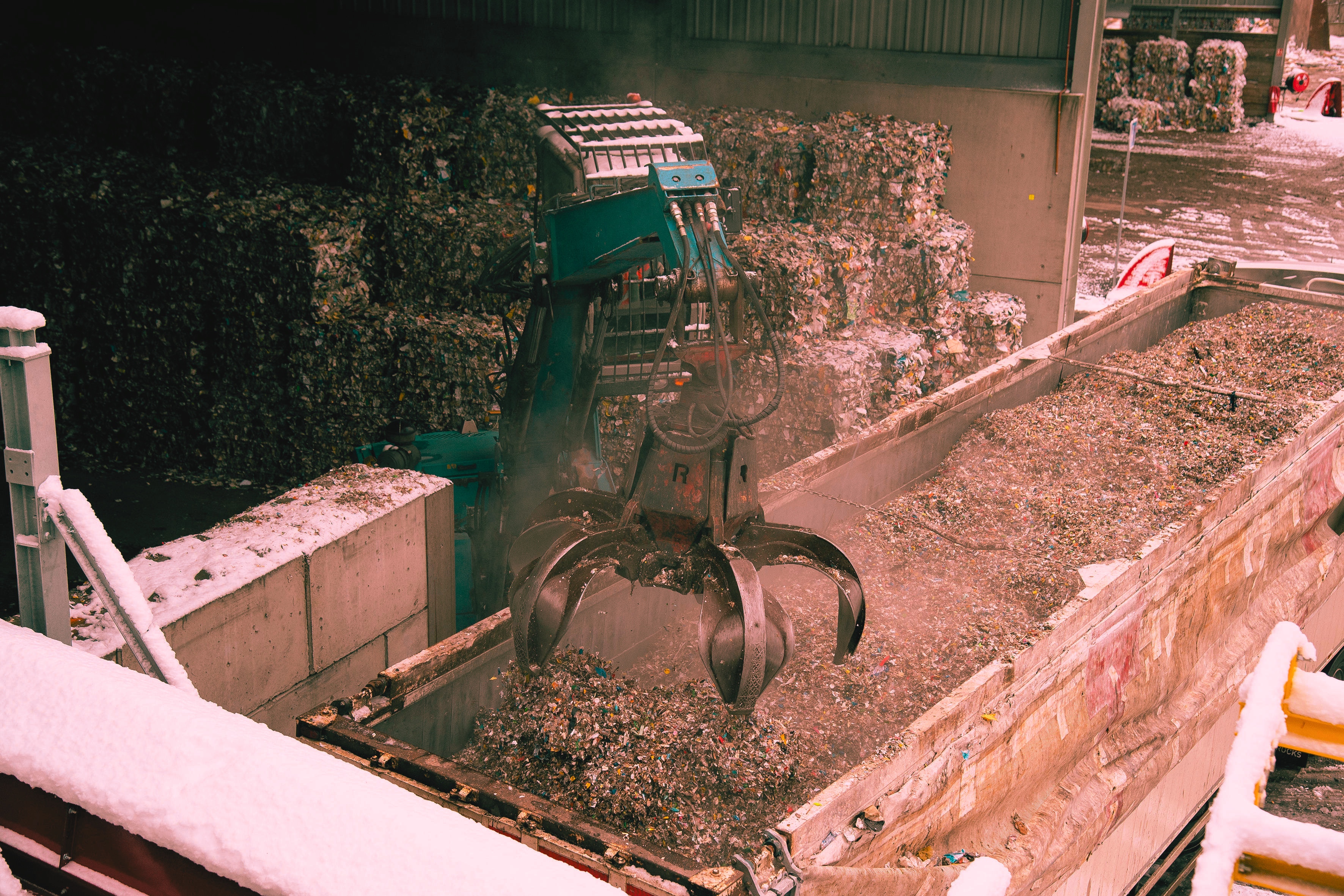
The EU has world-leading ambitions for a circular plastics economy, but the gap between policy targets and industrial reality is widening. Regulation is tightening, investment is being announced, and some collection systems are delivering genuine results. At the same time, Europe's recycling sector is contracting at the very moment it needs to grow. Understanding what is actually happening on the ground requires looking at both sides of that picture.
Wave of Plant Closures and Bankruptcies
Europe's plastics recycling sector is experiencing its deepest crisis on record. According to Plastics Recyclers Europe (PRE), the industry lost almost one million tonnes of recycling capacity between 2023 and the end of 2025, with 2024 recording the largest capacity contraction ever measured and preliminary figures showing a further 50% rise in facility closures in the beginning of 2025. The Netherlands, Germany, and the UK have been hit hardest. Veolia exited plastics recycling in Germany entirely, closing its Bernburg complex. In the UK, Viridor shut its Avonmouth facility just two years after opening, and Biffa closed its Sunderland plant despite having invested £7 million in 2020. The closures are accelerating rather than slowing.
The Economics
The root cause is a price gap that makes recycling commercially unviable for many operators. A global oversupply of cheap petrochemicals, largely from Chinese capacity expansions, has pushed virgin plastic prices down sharply. With virgin plastic so cheap, brands have little financial incentive to use recycled alternatives beyond legal minimums, leaving recyclers without reliable demand for their output. Warehouses full of unsellable recyclate have become a common operational reality across the sector.
Small and Medium Enterprises
Small and medium enterprises (SMEs) form the backbone of European plastics recycling, and they are bearing the brunt of the crisis. Nearly every named bankruptcy in the current wave has been an SME: Stiphout Plastics in the Netherlands, Umincorp in Amsterdam, Saperatec in Germany, and many others. Larger operators can absorb losses or restructure; smaller businesses cannot. Access to financing has become as significant a problem as the price environment itself, with high interest rates cutting off the capital SMEs need to upgrade equipment, meet compliance requirements, and weather weak market conditions.
Chemical Recycling
Chemical recycling, which breaks plastic down to a molecular level and can handle materials mechanical recycling cannot, is frequently cited as a solution for complex packaging streams. The reality on the ground is sobering. Of 65 projects planned across Europe with a combined capacity of 2.8 million tonnes per year, in October 2025, only 18 plants were operational, producing just 290,000 tonnes per year. Nine projects have been officially cancelled, including major investments by Dow, Neste, and ExxonMobil. Plants that are running often significantly underperform their stated capacity. The technology works in principle, but economics, feedstock challenges, and regulatory uncertainty have prevented it from scaling at the pace the transition requires.
Where Circularity Is Working
The picture is not uniformly bleak. Certain collection systems, polymer streams, and facilities demonstrate that circular plastics can work at scale when the right conditions are in place.
Deposit Return Schemes
Deposit return schemes (DRS) charge a small deposit on beverage containers at the point of purchase, refunded when the container is returned, and they consistently outperform all other collection methods. Germany achieves approximately 98% collection, Norway 92%, and Ireland, which launched in February 2024, reached 72%. Romania, previously among the EU's worst performers on packaging recycling, reached 83% collection within 18 months of launching. As of late 2025, 18 of 27 EU member states have operational schemes, with the EU's Packaging and Packaging Waste Regulation (PPWR) mandating coverage across all member states by 2029.
PET Bottle-to-Bottle Recycling
PET bottle-to-bottle recycling is the most mature circular loop in European plastics. The sorting-for-recycling rate reached 75% in 2022, up from 61% in 2020, and the volume of recycled PET going back into bottles increased 50% over the same period. Several major brands have demonstrated that 100% recycled PET packaging is commercially viable at scale, including Nestlé's Buxton Water in the UK, and some of Unilever's Dove and Hellmann's ranges. This stream works because the material is relatively homogeneous, increasingly well-collected through DRS, and supported by established food-grade decontamination technology.
Individual Successes
Belgium's Fost Plus Extended Producer Responsibility (EPR) scheme achieves 80% overall packaging recycling without a deposit return system, the highest rate in the EU, already exceeding the EU's 2030 target of 70%. Despite the current pressure on its recycling sector, the Netherlands still achieves 76% overall packaging recycling in 2024, also ahead of the 2030 target, demonstrating that strong collection infrastructure can coexist with an industry under severe economic strain. At the facility level, Site Zero in Sweden, opened in November 2024, is the world's largest plastics sorting plant, capable of sorting 12 plastic types at 95% efficiency using artificial intelligence and near-infrared sensor technology. TOMRA's Områ facility in Norway, opened in November 2025, handles 90,000 tonnes of plastic packaging per year and represents a new benchmark for national sorting infrastructure. On the technology side, Carbios has developed an enzymatic biorecycling process capable of breaking down coloured and multilayer PET that mechanical recycling cannot handle, with its industrial plant in Longlaville, France targeting production from 2028.
Conclusion
The ground-level reality of Europe's circular plastics economy in 2026 is one of genuine tension. The recycling infrastructure that exists is under severe economic pressure, capacity is shrinking, and the gap between regulatory ambition and industrial reality is real. But the examples in this final section are not trivial footnotes. Deposit return schemes work wherever they are properly implemented. PET bottle-to-bottle recycling is a functioning circular loop at commercial scale. Belgium and the Netherlands have already hit targets the rest of Europe is still striving for, and facilities like Site Zero are demonstrating what next-generation sorting infrastructure can achieve. The crisis is real, but so is the proof of concept. The question facing the EU is not whether circularity is possible, but whether the economics and policy environment can be stabilised quickly enough to protect the industry that needs to deliver it.
FAQs
Got A Question?
Everything you need to know about impact careers, sustainable job opportunities and our talent network in one easy place.
Our House Views content library and Awareness to Action series share insights on sectors, roles and career moves. Many candidates use these resources to narrow their focus before speaking with us.
Because the numbers are clear. Green and transition sectors are growing faster than the rest of the economy, attracting capital, talent and innovation. Positioning yourself there is a commercial decision, not just a values one.
Awareness to Action is our interview and insight series. We speak with leaders across the impact economy and turn real conversations into practical guidance for careers, teams and capital.
Yes, we regularly feature impact investors, founders and sustainability leaders in interviews and House Views content. If you have something valuable to share with the impact economy, we would love to hear from you.