Humanity Now Uses 1.73 Earths Per Year
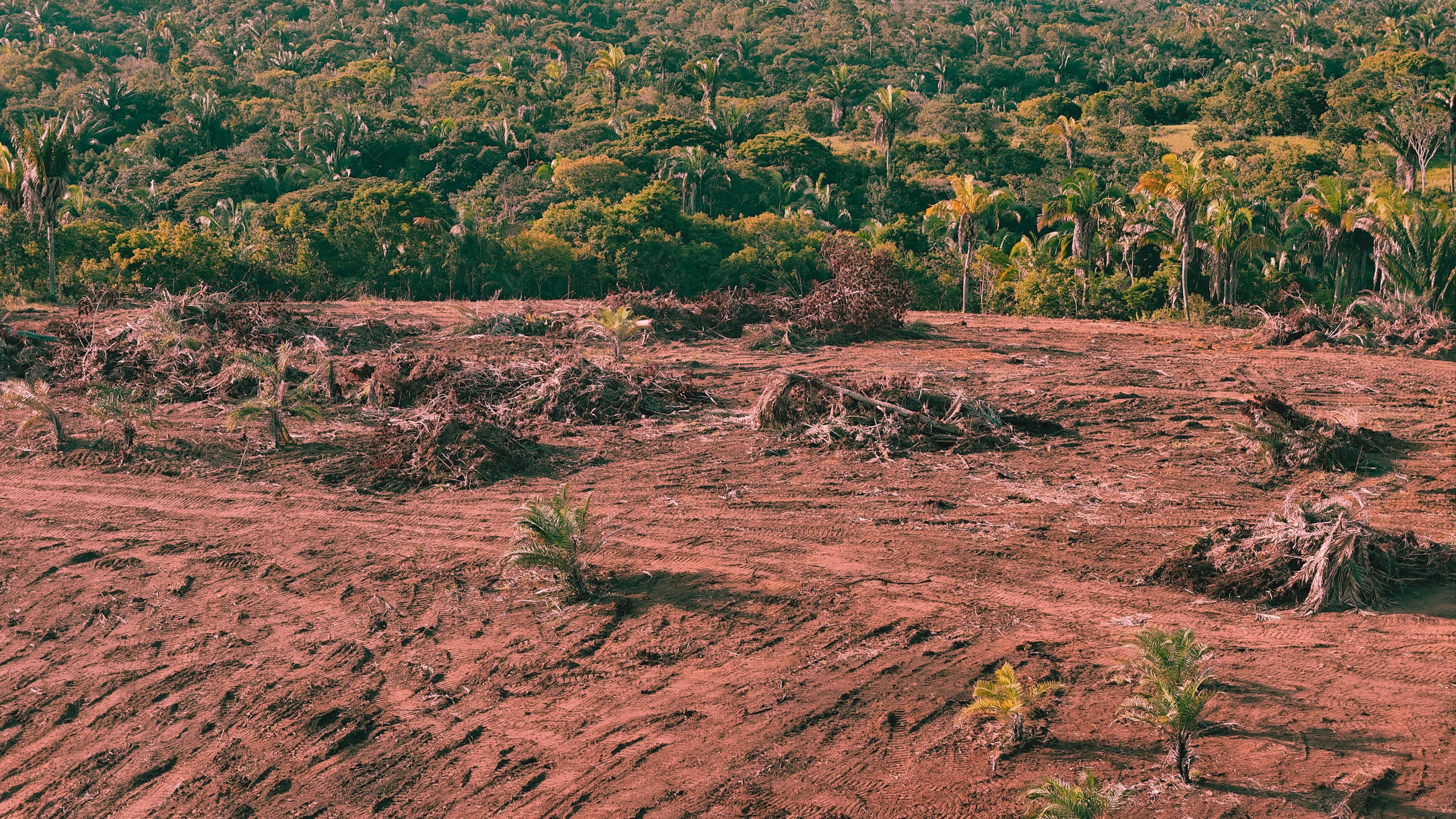
Every year, Global Footprint Network calculates the date by which humanity has used up everything nature can regenerate for the entire year. This year, that date is 30 July, and 2026 marks the highest level of global ecological overshoot ever recorded.
Think of it as a household spending its whole year's income by midsummer, then continuing to spend for another five months on credit. The credit here is nature's capital: forests, fisheries, soil, and the atmosphere's capacity to absorb carbon, drawn down faster than it can replenish itself. Humanity currently uses the equivalent of 1.73 Earths a year, meaning renewing everything consumed within twelve months would require nearly double the planet actually available.
That is not a distant warning about the future. It describes how the global economy is already running, for five months of every year.
Why the earth overshoot day Trajectory Matters More Than the Date
In 1973, Earth Overshoot Day fell in late December. By 2026, it falls in late July. The chart below, produced by Global Footprint Network, plots that slide across five decades.
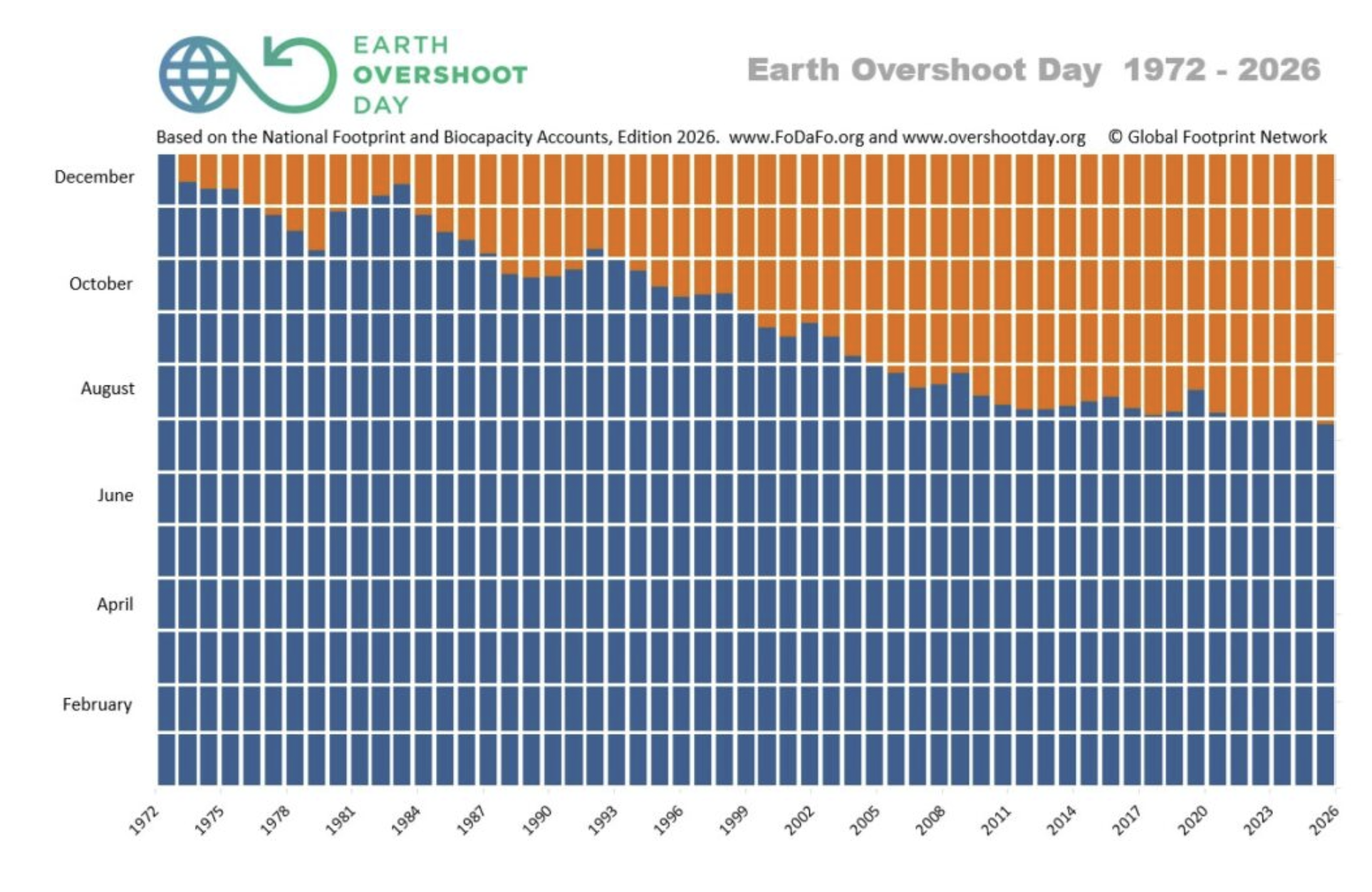
The shaded band in the chart represents a running total. Each year humanity exceeds nature's annual budget, that year's overshoot does not disappear, it accumulates. Since global overshoot began in the early 1970s, those annual overshoots have built into what Global Footprint Network calls an ecological debt, currently equivalent to more than 20 years of the planet's entire annual regenerative capacity. In practical terms, even if humanity stopped adding to that debt today, it would take upwards of two decades of the planet operating at full regenerative capacity, with zero further overshoot, simply to repay what has already been borrowed. That debt is not standing still. Each year adds a further 0.73 planet-years on top of what is already owed.
This year's date is actually six days later than 2025's, but that shift reflects a methodology update, specifically a revised estimate of how much carbon the ocean can absorb, rather than genuine improvement. Real-world consumption alone would have pushed the date two days earlier than last year. Either way, 2026 still represents the highest level of overshoot ever recorded.
Fossil fuel emissions are the largest single contributor to this picture, making up 61% of humanity's ecological footprint, more than any other category by a wide margin.
The picture also looks very different depending on where you live. If everyone on the planet consumed as people in Qatar do, humanity's entire annual budget would be exhausted by 4 February. If everyone consumed as people in the UK do, the date would fall on 22 May, requiring 2.6 Earths. Other countries, including Bangladesh and Nigeria, have no overshoot day at all: their populations currently consume within the planet's means.
What Would Actually Move the Date
None of this is fixed. Global Footprint Network's #MoveTheDate research quantifies exactly how much room exists to shift the trajectory. Cutting fossil fuel emissions by 50% would move the date back roughly three months, the single largest lever available, given how dominant fossil fuels are within the overall footprint. It is not the only one. Halving global meat consumption and replacing those calories with a vegetarian diet would move the date back 17 days, more than half of that from reduced methane emissions alone. Halving food waste worldwide, given that a third to a half of all food produced is never eaten, would move it back a further 13 days.
Neither of the latter two changes depends on speculative technology. Both are logistical and behavioural shifts that already exist as viable, costed interventions. The gap is not a shortage of solutions. It is the distance between what individuals, businesses, and governments could collectively do, and what is actually being adopted, funded, and delivered at the pace the debt demands.
Ecological Debt needs the Same Discipline as Financial Debt, and the same kind of talent
Overshoot has been described in ecological terms for more than fifty years. What has been largely missing is the same rigour applied to financial debt: tracking it, forecasting the point at which it becomes unmanageable, and pricing decisions accordingly. Almost none of that discipline has been consistently applied to natural capital, even though the underlying dynamic, a widening gap between what is drawn down and what is replenished, follows a comparable pattern.
That gap is where the opportunity now sits. Businesses built around circular material use, regenerative agriculture, low-carbon energy, and nature restoration are, in effect, operating at a resource surplus rather than a deficit, a difference that becomes more commercially relevant as constraints tighten elsewhere. Scaling them requires people who can do for ecological capital what has long been done for financial capital: price it accurately, model its trajectory, and act on that information, whether they sit in finance, operations, strategy, or product design.
The question worth asking is not whether ecological debt is real. Global Footprint Network's own accounting settles that. The question is whether the people making commercial decisions inside your organisation are treating it with anything like the seriousness they would apply to debt on a balance sheet.
FAQs
Got A Question?
Everything you need to know about impact careers, sustainable job opportunities and our talent network in one easy place.
Our House Views content library and Awareness to Action series share insights on sectors, roles and career moves. Many candidates use these resources to narrow their focus before speaking with us.
Because the numbers are clear. Green and transition sectors are growing faster than the rest of the economy, attracting capital, talent and innovation. Positioning yourself there is a commercial decision, not just a values one.
Awareness to Action is our interview and insight series. We speak with leaders across the impact economy and turn real conversations into practical guidance for careers, teams and capital.
Yes, we regularly feature impact investors, founders and sustainability leaders in interviews and House Views content. If you have something valuable to share with the impact economy, we would love to hear from you.