Record Ocean Heat: How El Niño 2026 Shapes Global Climate

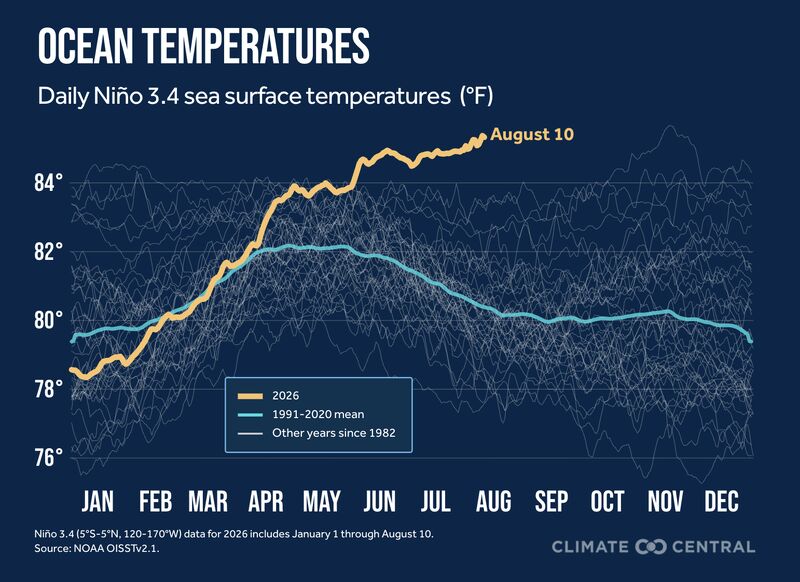
A graph from Climate Central shows daily sea surface temperatures in the Niño 3.4 region of the Pacific, the patch of ocean meteorologists use to track and declare El Niño events. By early August 2026, the temperature had climbed well above both the 1991-2020 average and the full range of every other year recorded since 1982. NOAA now puts the odds of this El Niño becoming “very strong” through autumn and winter at greater than 90%.
Ocean Heat Has Been Building the Whole Time
Land-based heat gets the headlines: the heatwaves, the wildfire warnings, the broken temperature records. Most of the heat trapped by rising greenhouse gas emissions is absorbed by the ocean rather than the air. The ocean absorbs roughly 90% of excess heat, according to NOAA. Water can absorb far more heat than air can for the same rise in temperature, which is why the ocean can take in this much heat while its surface temperature rises only gradually. Ocean heat content has been rising consistently since the 1990s, and the rate at which the ocean is absorbing that heat has nearly doubled over the past decade compared with the decade before.
Ocean Heat Doesn't Stay in the Ocean
Once absorbed, that heat does not sit passively offshore. Warmer water fuels marine heatwaves, intensifies storms, and shifts rainfall patterns across entire continents. That heat is absorbed at sea, but its consequences land on people living nowhere near it.
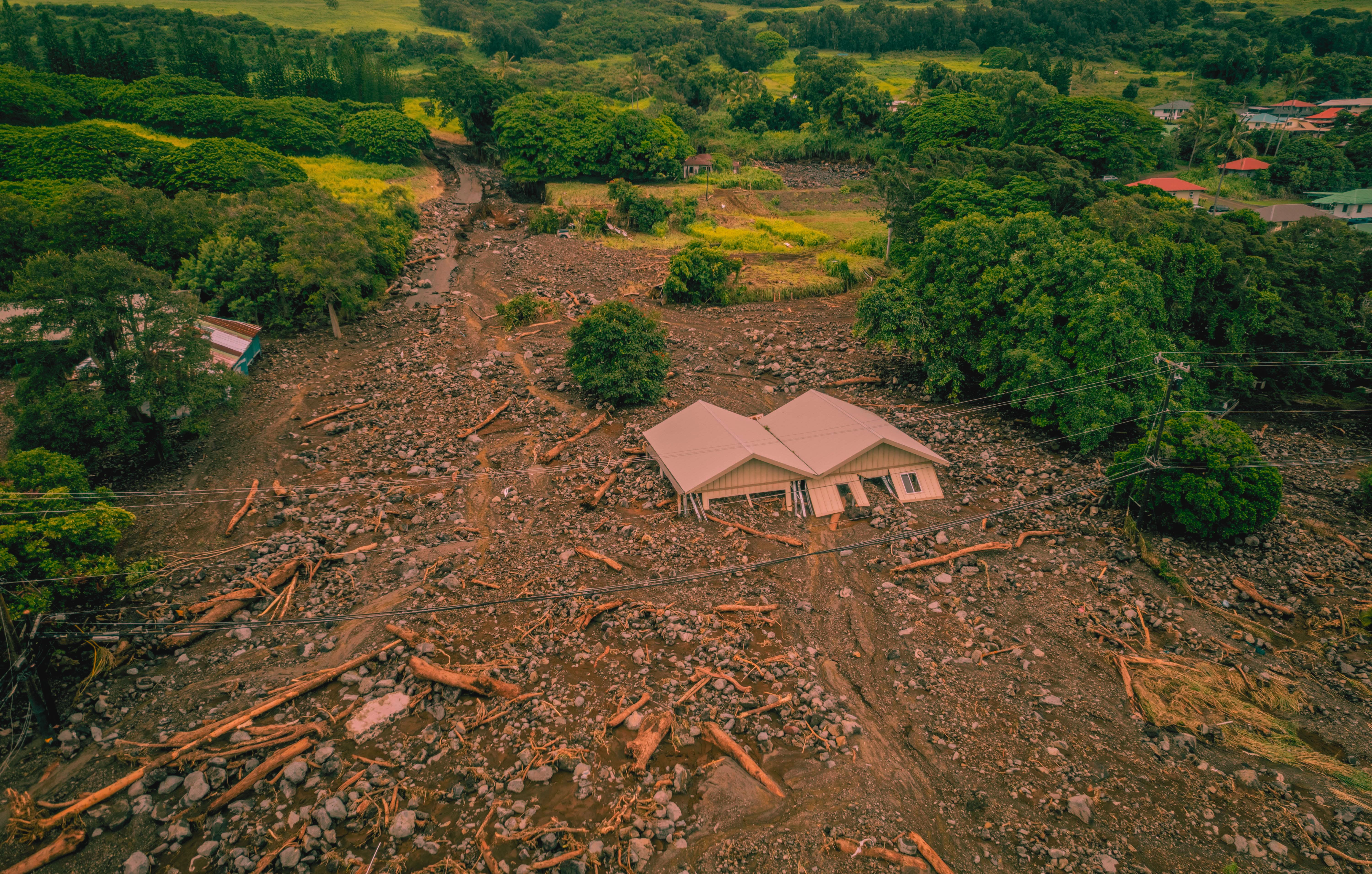
Treating land-based weather and ocean warming as separate stories misses how directly one drives the other. A hotter Pacific reshapes the timing of monsoon season in South Asia, storm strength in the Atlantic, and drought risk in East Africa. Hurricane Lala, which struck Hawaii's Big Island in August 2026, the first direct hit there since 1871, formed over water running roughly 3°C warmer than average.
Why This El Niño Is Different
The Niño 3.4 region earned its place as the standard ENSO monitoring area because it captures ocean-atmosphere interactions more reliably than any other patch of the Pacific. NOAA declares El Niño conditions once the region's temperature anomaly reaches 0.5°C above average and holds there for several months.
What makes 2026 unusual is not just the strength of this El Niño. It is developing faster, at comparable points in their own timelines, than the two other “very strong” El Niño events in the modern record, 1997-98 and 2015-16. It is also happening on top of a baseline that has itself risen substantially from decades of warming, a distinction significant enough that NOAA introduced a new index this year specifically to separate the two effects.
The Climate Careers Already Being Shaped by This
Industries with a direct stake in ocean conditions incorporate ENSO forecasts into real operational planning. Kuehne+Nagel, one of the world's largest logistics companies, has published commercial guidance this year on the risk this El Niño poses to Panama Canal capacity and global shipping routes. Marine insurers issue formal seasonal guidance tied to ENSO conditions, adjusting how they assess hurricane and coastal risk for clients. The UN's Food and Agriculture Organization maintains a risk-mapping system scoring El Niño's likely impact by fishing region, and has built dedicated digital tools specifically to turn ENSO forecasts into decisions fisheries can act on before losses happen rather than after.
The ocean absorbing most of the planet's excess heat is not a separate crisis from the one playing out on land. It is the same crisis, and rerouting shipments, repricing insurance, and preparing fisheries and food systems before the damage arrives are what taking that seriously actually looks like.
The Graph Is a Warning Worth Reading Properly
The line on the Niño 3.4 graph reflects a baseline that has already shifted, an El Niño developing faster than any in the modern record, and consequences already reaching land. Hurricane Lala hitting Hawaii is one example. In East Africa, droughts linked to this same El Niño have already damaged harvests badly enough that the UN's Food and Agriculture Organization and World Food Programme launched a $202 million appeal to reach 8.8 million people across 22 countries. Reading a graph like this properly means understanding all three of those things at once, the physics, the historical comparison, and the real-world consequence, rather than treating them as separate stories.
FAQs
Got A Question?
Everything you need to know about impact careers, sustainable job opportunities and our talent network in one easy place.
Our House Views content library and Awareness to Action series share insights on sectors, roles and career moves. Many candidates use these resources to narrow their focus before speaking with us.
Because the numbers are clear. Green and transition sectors are growing faster than the rest of the economy, attracting capital, talent and innovation. Positioning yourself there is a commercial decision, not just a values one.
Awareness to Action is our interview and insight series. We speak with leaders across the impact economy and turn real conversations into practical guidance for careers, teams and capital.
Yes, we regularly feature impact investors, founders and sustainability leaders in interviews and House Views content. If you have something valuable to share with the impact economy, we would love to hear from you.