Electric Vehicle Business Model: Charging and Leasing

For most of the twentieth century, car companies made their money in one place: the forecourt. A customer walked in, agreed a price, and drove away. The manufacturer took its margin on that single transaction and the relationship was largely over. That model worked well for decades, but it is now under serious pressure. The rise of electric vehicles (EVs) is not just changing what powers a car. It is changing how car companies make money at every stage of a vehicle's life.
As demand for petrol and diesel engines falls and electrified powertrains take a growing share of new registrations, the traditional formula of earning one large margin at the point of delivery is beginning to erode, particularly across Europe. In its place, a new model is emerging: one built on recurring software revenue, energy services, flexible financing, and long-term digital relationships with the customer. Understanding this shift matters whether you work in the automotive industry, invest in it, or simply want to understand where it is heading.
The old car-sales formula is breaking down in Europe
The numbers tell a clear story. According to data from the European Automobile Manufacturers Association (ACEA), petrol and diesel vehicles accounted for just 30.6% of European Union (EU) registrations in January and February 2026, down from 38.7% the year before. Reuters separately reported a sharp fall in petrol registrations in January alone. For legacy manufacturers that still depend on combustion-heavy product mixes, complex engine aftersales, and dealer incentive structures, the margin pressures ahead are significant.
China is already demonstrating the next electric vehicle business model
Charging speed is becoming a competitive moat
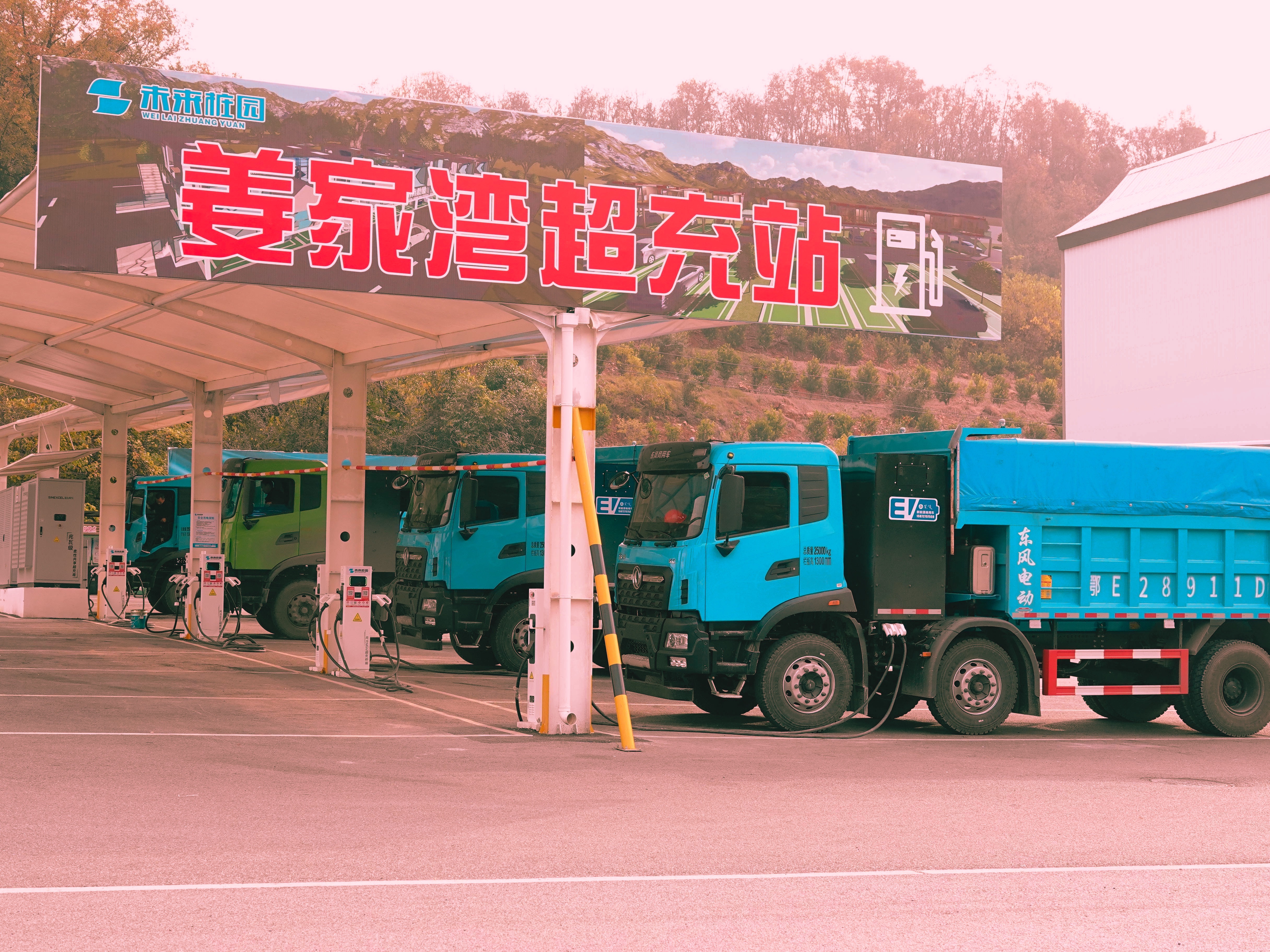
While Europe contends with the transition, China is demonstrating just how quickly the next model can scale. Data from the International Council on Clean Transportation (ICCT) shows that China's zero-emission medium- and heavy-duty vehicle market grew by 115% in the first half of 2025 compared to the same period the previous year. Reuters reported that zero-emission vehicles now account for 29% of all heavy-duty truck sales in China. With a national plan to deploy 28 million charging stations by 2027, fast and reliable energy access is rapidly becoming a product strategy in itself, not merely an infrastructure obligation.
Ecosystem partnerships are outpacing standalone vehicle launches
NIO, a Chinese electric vehicle manufacturer founded in 2014 and now operating across Europe and North America, illustrates what ecosystem thinking looks like in practice. Its Battery as a Service (BaaS) model is a good example of battery leasing in action. Rather than buying the battery outright as part of the car purchase, the customer pays a monthly subscription to access a battery, which can be swapped or upgraded as the technology improves. This removes a significant portion of the vehicle's upfront cost and turns it into a predictable recurring fee. Paired with a global expansion of its charging and swap network, NIO is building what amounts to an integrated operating system around the vehicle, combining financing, energy, hardware, and customer retention in one offer. The operator that can do this well, not just the one that builds the best vehicle, is the one positioned to lead.
Which players look most exposed as revenue moves beyond the showroom
The brands most at risk are those still reliant on one-time hardware margins, suppliers with limited software leverage, and retail models that lose touch with the customer once the keys have changed hands. McKinsey has noted that established original equipment manufacturers (OEMs), the companies that design and build the vehicles themselves, are in a race to close the software gap with newer entrants. Against the backdrop of Europe's accelerating powertrain shift, the vulnerability of those slow to adapt is becoming harder to ignore.
How an EV charging business model creates recurring revenue
For those adapting successfully, the EV charging business model has expanded well beyond the simple sale of electricity. Fleet routing, utilisation management, dynamic pricing, and corridor access are all becoming distinct service layers with real commercial value. Milence, a European heavy-duty charging network operator, runs more than 33 charging hubs across the continent. The EU's Alternative Fuels Infrastructure Regulation (AFIR) requires member states to establish dedicated heavy-duty charging capacity along major transport routes, creating a structural foundation on which service-based revenue can be built reliably.
Why battery leasing and OTA software change the margin story
Battery leasing lowers the entry point while preserving asset value
Battery leasing is a financing arrangement in which the customer buys the vehicle but not the battery inside it. Instead, they pay a regular subscription fee to use the battery, with the manufacturer or a leasing partner retaining ownership of the physical asset. This matters for several reasons. It reduces the upfront purchase price considerably, since the battery is often the most expensive single component in an electric vehicle. It also gives the operator ongoing visibility over upgrade cycles, residual values, and how the battery can be redeployed or recycled at the end of its life in the vehicle. NIO's BaaS model is currently the most prominent example of this approach at commercial scale.
Over-the-air updates turn the vehicle into an ongoing revenue platform
Over-the-air (OTA) software updates allow manufacturers to send new software to a vehicle remotely, in the same way a smartphone receives app or system updates. Tesla pioneered this approach and has demonstrated that OTA capability can be used not only for maintenance and bug fixes but also to sell optional feature upgrades after delivery. Mercedes has introduced a similar model through its Mercedes me Store, enabling new capabilities to be unlocked on vehicles already on the road. As McKinsey points out, OTA capability is not just an engineering convenience. It is the foundation of a product monetisation model that extends across the entire ownership lifecycle.
Connected-car data creates value well beyond the first owner
Modern electric vehicles generate substantial amounts of data about how they are driven, charged, and maintained. McKinsey's connected-car research highlights how this vehicle data can generate both revenue opportunities and cost efficiencies throughout a car's working life, potentially across multiple owners. Insurance personalisation, predictive servicing, smart charging optimisation, and fleet management are all products that depend on this data. The central question for OEMs is straightforward: who controls consented customer insight after the point of sale, and how is that insight being put to work?
The signals that reveal who is winning
Three areas are worth monitoring closely: battery economics, regulatory direction, and end-of-life circularity.
- The International Energy Agency (IEA) reported an 8% average fall in battery prices during 2025, improving the unit economics of battery leasing at scale.
- By December 2025, Europe's heavy-duty charging observatory had recorded 2,988 stations, of which 1,039 offered at least one 350 kW charging point.
- Renault's Mobilise division has begun rolling out vehicle-to-grid services to the public, signalling early moves into grid revenue.
- Nissan continues to expand its second-life battery programme, extending asset value beyond the vehicle's first use.
Each of these signals points toward a business model that generates durable margin from energy flexibility, not just from vehicle production.
Conclusion
The electric vehicle business model has permanently moved on from a single transaction at the point of sale. The manufacturers and operators most likely to succeed are those who treat the vehicle, the battery, the data stream, and the customer relationship as parts of a single long-term revenue system. A well-constructed EV charging business model, combined with battery leasing economics, OTA software monetisation, grid participation, and ecosystem partnerships, is what separates a company building for the transition from one still betting against it.
FAQs
Got A Question?
Everything you need to know about impact careers, sustainable job opportunities and our talent network in one easy place.
Our House Views content library and Awareness to Action series share insights on sectors, roles and career moves. Many candidates use these resources to narrow their focus before speaking with us.
Because the numbers are clear. Green and transition sectors are growing faster than the rest of the economy, attracting capital, talent and innovation. Positioning yourself there is a commercial decision, not just a values one.
Awareness to Action is our interview and insight series. We speak with leaders across the impact economy and turn real conversations into practical guidance for careers, teams and capital.
Yes, we regularly feature impact investors, founders and sustainability leaders in interviews and House Views content. If you have something valuable to share with the impact economy, we would love to hear from you.