Marine Heatwave: European Seas 6°C Above Average
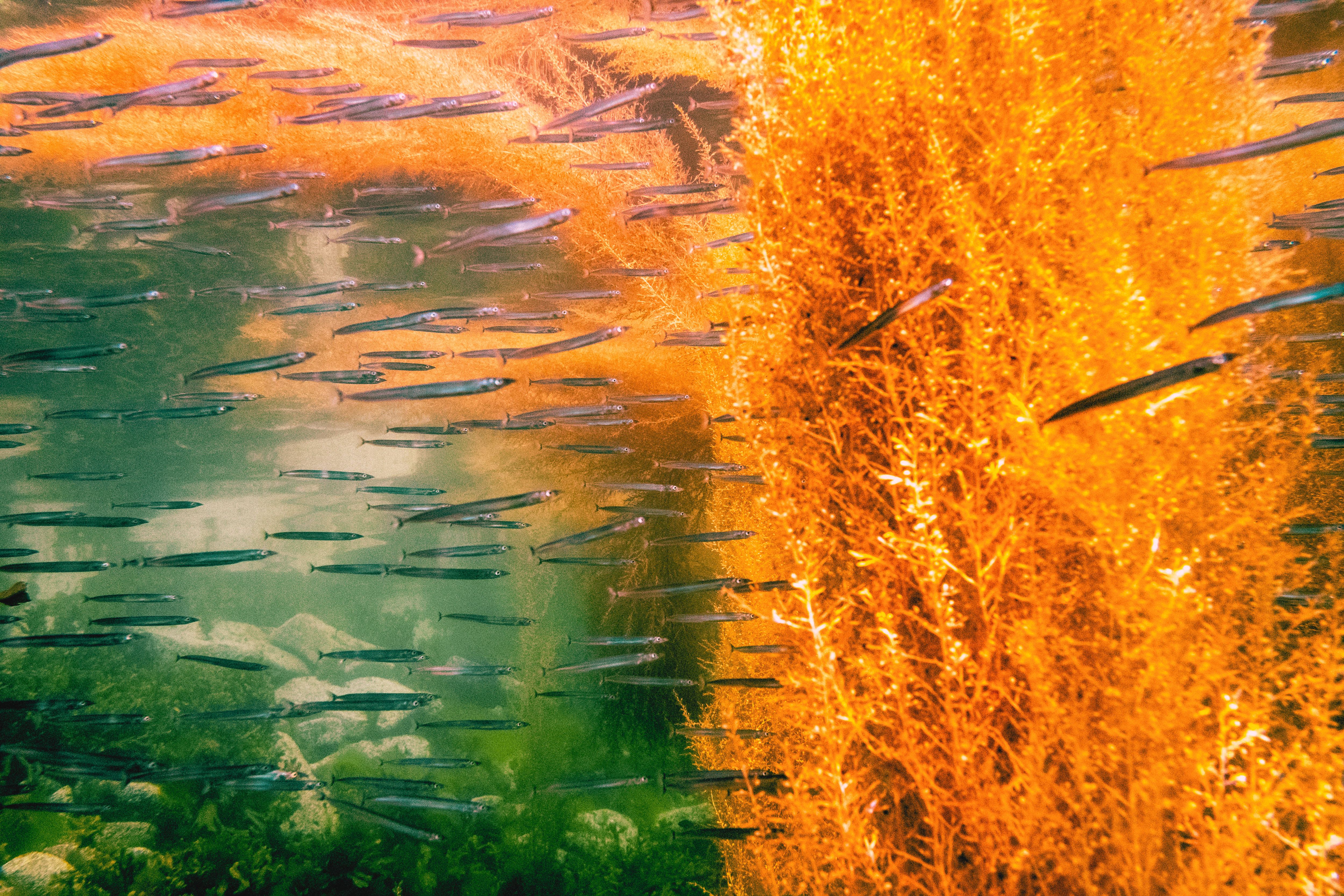
Most climate change stories talk about rising temperatures above the water. Heat doesn’t just stay in the air, however. It gets slowly absorbed by the ocean, causing a destructive ripple effect on marine life.
Across Europe, the baking summer heat of 2026 has led to warnings that a marine heatwave could reach “extreme” levels, raising serious concerns for marine life. Species such as seagrasses and shellfish are adapted to a narrow range of water temperatures, and prolonged heat above that range could cause mass die-offs.
Sea surface temperatures off southern France and western Italy are especially alarming, rising approximately 6°C above the long-term average. Similar pressures are being seen across European waters, from the Baltic to the Gulf of Lion.
The commercial risk is easy to underestimate. Warmer seas can affect fisheries, aquaculture, tourism, water quality, coastal infrastructure, insurance exposure, and food supply chains. If high temperatures persist, the damage will not stay offshore for long.
The UK’s Marine Heatwave Could Reach Extreme Levels
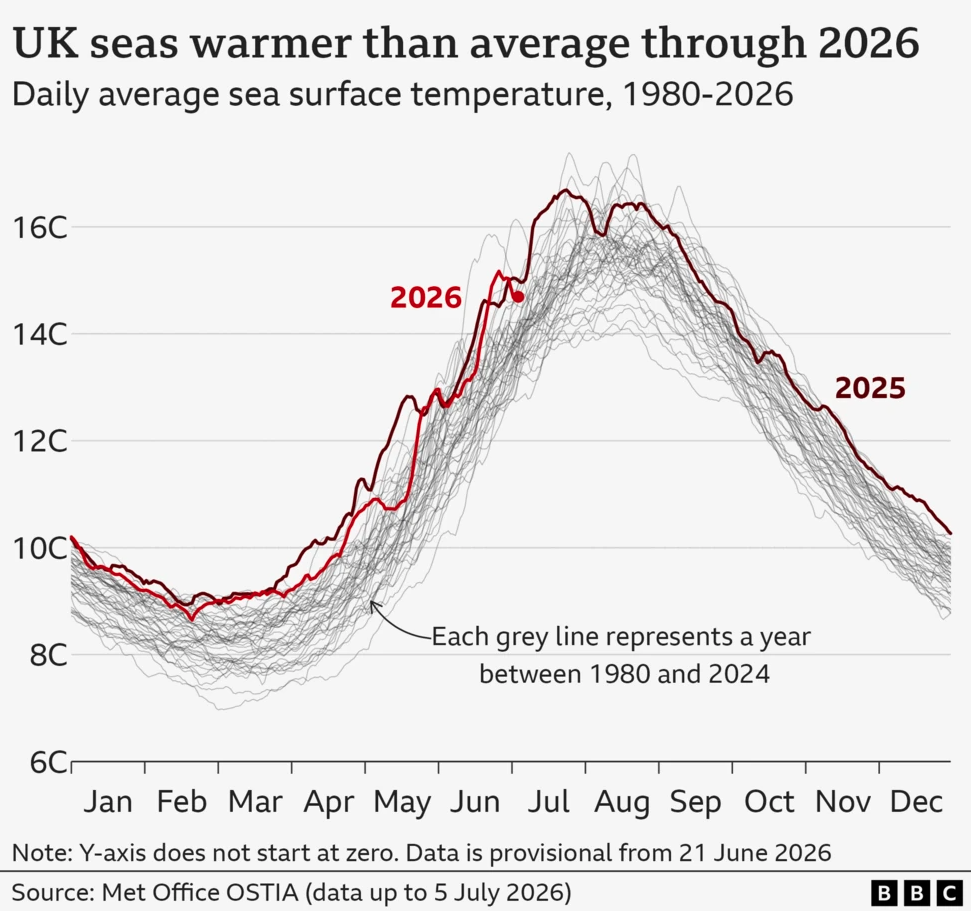
In July 2026, the Met Office warned that marine heat around the UK could reach “extreme” levels, raising concerns for marine ecosystems and coastal industries around the UK. The heatwave was strongest off the coasts of eastern and southern England, where sea temperatures were running around 4–5°C above average in places.
Sensitive marine habitats such as seagrasses and kelp forests are likely to experience heat stress, and in severe cases, mass die-off. Both act as significant carbon sinks, locking carbon into coastal sediment and biomass, and both underpin the fish and shellfish populations that coastal fisheries depend on. Meanwhile, warmer-water creatures such as octopus are increasingly moving into more northerly waters.
Such high temperatures have occurred before. What’s unusual is that they’re occurring earlier, more regularly, and with greater intensity.
The Commercial Risk Is Harder to See Than Extreme Heat
What occurs below the waterline is easy to forget about. Warnings of marine ecosystem devastation, harmful algal blooms, or vast swarms of jellyfish are hard to appreciate when staring out across the sea. It looks just like it always has.
Those problems tend not to stay in the sea, however.
When people are overheating in cities or seeing fields become cracked and dry, the risk is visible. Warmer seas are ignored because the disruption is delayed, surfacing weeks or months later in a part of the economy that looks, at first glance, unconnected to the sea.
Warmer Seas Create Problems on Land
Fishing businesses are among the first to feel the impact. In 2018, an extended marine heatwave in the western English Channel created ideal conditions for a harmful algal bloom, warm, stable, sunlit, low-turbulence water lets certain microscopic algae multiply rapidly. As mussels and other shellfish filter-feed, they accumulate the toxins these algae produce. Once toxin levels exceed safety thresholds, regulators have no choice but to close harvesting, as happened at mussel farms in St Austell Bay and elsewhere along the Channel that year. The shellfish were alive and the water looked normal. The loss came entirely from the closure notice: businesses were legally barred from selling anything until levels fell again.
Harmful algal blooms of this kind already cost the shellfish industry more than €30 million a year in the UK, and close to €1 billion a year across the EU as a whole, mostly through this same pattern of pre-emptive closures rather than visible ecological collapse.
Predicting and managing this kind of risk requires people who can connect the physical signal, water temperature, nutrient levels, bloom conditions, to the commercial consequence, a closure notice, an insurance claim, a supply gap, before it happens rather than after. That is a role for marine scientists and data analysts working alongside infrastructure planners and supply-chain specialists.
Coastal Resilience Means Helping Others Interpret the Ocean
Risk rarely stays confined to a single company or sector. Early decline in seaside communities during the 20th century had knock-on effects for politics, economics, and society at large. A prolonged marine heatwave carries the same risk of spreading well beyond the businesses first affected.
The opportunities and costs will not be confined to the 'blue economy'. Adjacent companies can also benefit by helping at-risk sectors monitor, model, insure, and manage the threat.
Managing ocean-related risk might mean marine monitoring, satellite data, climate analytics, coastal engineering, port adaptation, insurance modelling, or supply-chain risk platforms. All of this remains significantly under built. Ocean-related development finance receives less than 1% of total global funding directed at the UN's Sustainable Development Goals, despite an estimated $175 billion a year being needed to meet ocean-related targets by 2030, making it the most underfunded of all 17 goals. What these capabilities have in common is that they help customers protect assets, avoid disruption, and make better decisions, and there is currently far more demand for them than supply.
What the Risks Coming Ashore Mean for Your Climate Risk Career
Marine heatwaves rarely look like the start of a career opportunity. What actually shows up first is a warmer sea, fewer shellfish, abnormal fish movements, stressed kelp, or a disappointing tourism season.
Then the effects start travelling: a fishing business loses yield, a processor loses supply, an insurer reassesses coastal exposure, a port faces new disruption, a water company deals with algal blooms, or an energy operator has to think harder about cooling and intake systems.
For some professionals, the next move may be closer to marine data, coastal resilience, aquaculture, insurance modelling, port infrastructure, climate analytics, food supply chains, or adaptation finance. For others, it may mean staying in their current firm but becoming the person who understands how ocean risk affects businesses before leadership is forced to care.
What matters most is the ability to connect the two: taking a physical signal, such as sea temperatures running several degrees above normal, and turning it into a decision about assets, suppliers, customers, pricing, investment, or strategy. Can you help an organisation see that what happens offshore may soon affect margins on land?
If the answer is yes, that is where the next serious opportunity may be hiding.
FAQs
Got A Question?
Everything you need to know about impact careers, sustainable job opportunities and our talent network in one easy place.
Our House Views content library and Awareness to Action series share insights on sectors, roles and career moves. Many candidates use these resources to narrow their focus before speaking with us.
Because the numbers are clear. Green and transition sectors are growing faster than the rest of the economy, attracting capital, talent and innovation. Positioning yourself there is a commercial decision, not just a values one.
Awareness to Action is our interview and insight series. We speak with leaders across the impact economy and turn real conversations into practical guidance for careers, teams and capital.
Yes, we regularly feature impact investors, founders and sustainability leaders in interviews and House Views content. If you have something valuable to share with the impact economy, we would love to hear from you.