AI Uses a Lot of Water. Your Burger Uses More.

AI is increasingly the villain of the environmental movement. Headlines about thirsty data centres stealing water from nearby towns, or the strain that the colossal energy demands place on the grid, do AI companies no favours. Many wonder if the outputs are worth the costs.
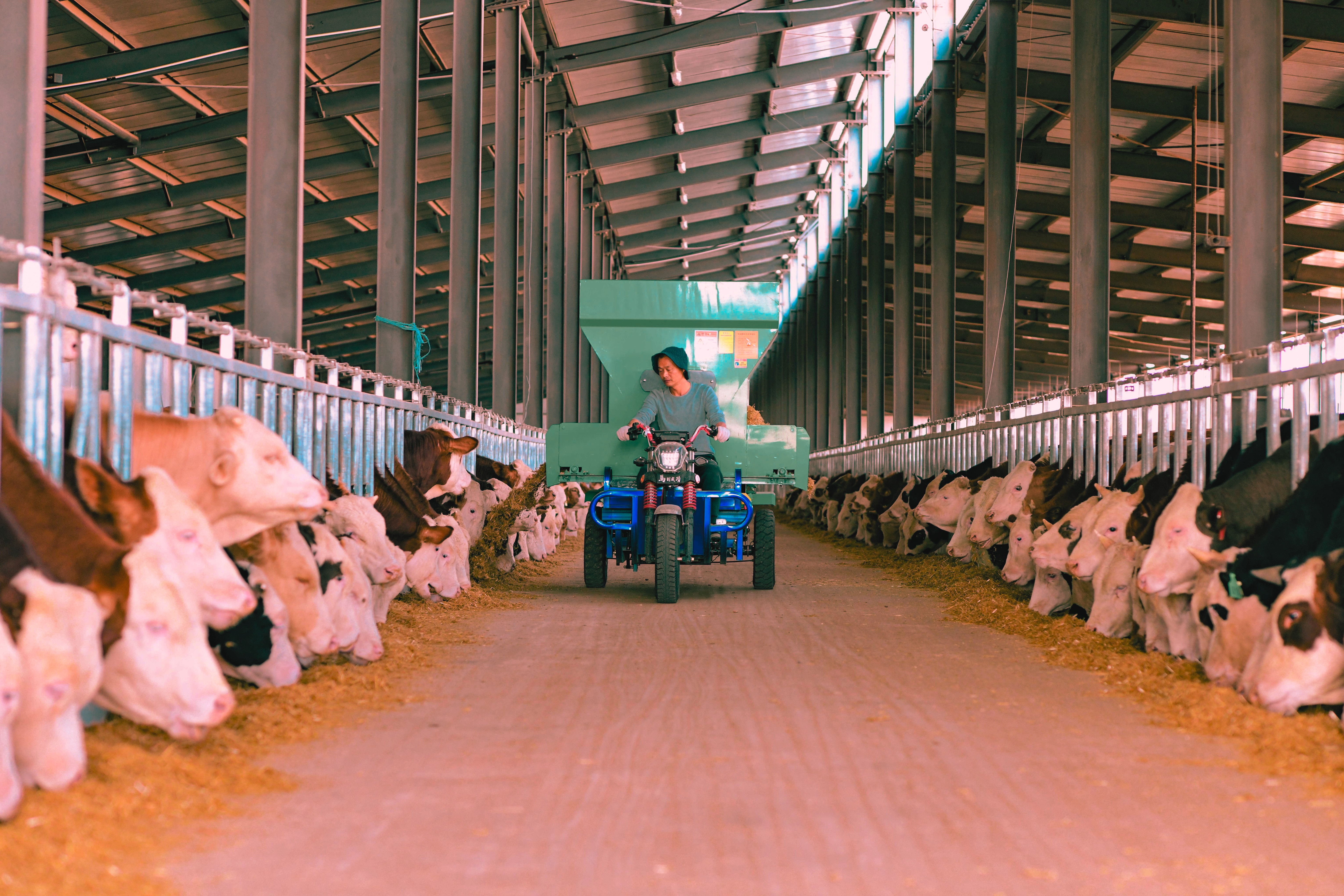
The concerns about AI are justified. Yet a 2026 analysis by Bank for Nature raises a broader question: why does industrial animal agriculture, despite its significantly larger environmental footprint, feature in only a fraction of climate reporting? Animal agriculture accounts for between 12 and 20% of global greenhouse gas emissions annually, compared to an estimated 1 to 2% for data centres, and uses roughly 200 times more water than AI data centres, yet receives far less public scrutiny. The comparison is not entirely straightforward. Animal agriculture is a global industry that feeds billions of people, while AI is still scaling. Data centre energy consumption is projected to double by 2030 according to the IEA, and water use will grow substantially alongside it. Even so, at double its current footprint, AI's resource use would still represent a fraction of what animal agriculture consumes today. For organisations and professionals trying to make a real environmental contribution, that mismatch matters.
AI's Environmental Impact Depends on Physical Infrastructure
Typing a question into ChatGPT or generating an image via Midjourney can feel like pulling content from the ether. There is a nothingness about the whole process. AI is not weightless. It depends on physical infrastructure.
Behind every chatbot, image generator, and model update sit data centres, cooling systems, electricity demand, water use, and local communities wondering who pays the price.
Data centre demand is expected to roughly double by 2030. If that growth is met primarily with fossil-fuelled power rather than renewables, AI's climate impact will grow significantly. The direction of energy procurement will be as important as the scale of growth itself.
AI does pose a genuine and growing climate challenge. It is expanding rapidly, and that pace of growth makes it harder to ensure the infrastructure supporting it is built sustainably from the outset.
Animal Agriculture Emissions and Water Use Dwarf Those of AI Data Centres
A full year of heavy daily AI use, sending dozens of messages every day, consumes approximately 110 litres of water. A single beef burger requires around 2,500 litres. One burger uses roughly 23 times more water than an entire year of intensive AI use.
The scale difference becomes even clearer at an industry level. A 2020 study estimated that producing feed for the global livestock sector uses over 4,000 trillion litres of water annually. Data centres consumed 560 billion litres in 2023. Livestock feed production alone consumes roughly 7,800 times more water than the entire global data centre industry.
The comparison requires some context. Not all water use is equivalent. Much of livestock's footprint comes from rainwater absorbed naturally by crops and pasture, which operates differently from the freshwater withdrawals that create local scarcity. Data centre impacts, by contrast, tend to be concentrated in specific locations, which can create acute pressure on local water systems even if the global total is smaller. The scale difference, however, remains enormous.
Animal agriculture also feeds billions of people, which matters. The more pointed question is how efficiently it does so. A significant share of the world's arable land and freshwater is used not to grow food for people directly, but to grow crops that feed livestock. The majority of the water footprint of beef production comes from irrigating animal feed rather than from the animals themselves. That is a significant inefficiency in how the world converts natural resources into food.
Both AI and Animal Agriculture Need Scrutiny, Not Just One
“AI is fine because farming is worse” is the wrong response. Instead, it is a lesson in scale, trajectory, and local context.
AI is growing fast, placing heavy pressure on specific communities and raising legitimate questions about whether the resource demands are justified by the benefits, especially when concerns around job displacement remain unresolved. Animal agriculture, by contrast, is already enormous, deeply entrenched, and harder to change. It also supports millions of jobs and provides a vital source of protein.
Both industries require scrutiny. For AI, the questions are about trajectory and whether growth can be decoupled from resource intensity. For animal agriculture, they are about entrenched systems, subsidy structures, and the pace at which alternatives can scale.
Where Impact Careers in Food, Energy, and Finance Are Emerging
The question worth asking is where money, skill, and institutional attention are flowing.
In AI, companies are already working to reduce water consumption and achieve the same outputs with a smaller environmental footprint, through low-carbon power, more efficient chips, and better cooling systems. In the food system, capital and talent are moving into regenerative agriculture, alternative proteins, plant-rich food innovation, and supply chain reform.
Both industries represent significant opportunities for professionals who want to work on systemic change. The most impactful roles will not always carry obvious sustainability labels. Reform in these sectors requires infrastructure specialists, food technologists, finance professionals, water managers, energy engineers, and commercial leaders as much as it requires policy advocates.
Banks Are Financing Animal Agriculture Emissions While Missing Climate Targets
Lending to meat, dairy, and feed corporations represents just 0.25% of the total loan portfolios of the largest US banks, yet accounts for roughly 11% of their reported financed emissions. A tiny slice of the portfolio carries a disproportionate share of the climate impact.
That also creates an opportunity. Capital allocation can either reinforce damaging systems or accelerate better ones. For professionals looking for meaningful work, capital allocation decisions are where skills in finance, risk, and strategy can have an outsized impact on environmental outcomes.
If your skills sit in energy, infrastructure, finance, food, agriculture, technology, policy, or operations, the question is simple: are you helping build systems that reduce pressure on the natural world, or helping scale systems that make the problem worse?
FAQs
Got A Question?
Everything you need to know about impact careers, sustainable job opportunities and our talent network in one easy place.
Our House Views content library and Awareness to Action series share insights on sectors, roles and career moves. Many candidates use these resources to narrow their focus before speaking with us.
Because the numbers are clear. Green and transition sectors are growing faster than the rest of the economy, attracting capital, talent and innovation. Positioning yourself there is a commercial decision, not just a values one.
Awareness to Action is our interview and insight series. We speak with leaders across the impact economy and turn real conversations into practical guidance for careers, teams and capital.
Yes, we regularly feature impact investors, founders and sustainability leaders in interviews and House Views content. If you have something valuable to share with the impact economy, we would love to hear from you.