Bottom Trawling: Who Pays the Real Cost?

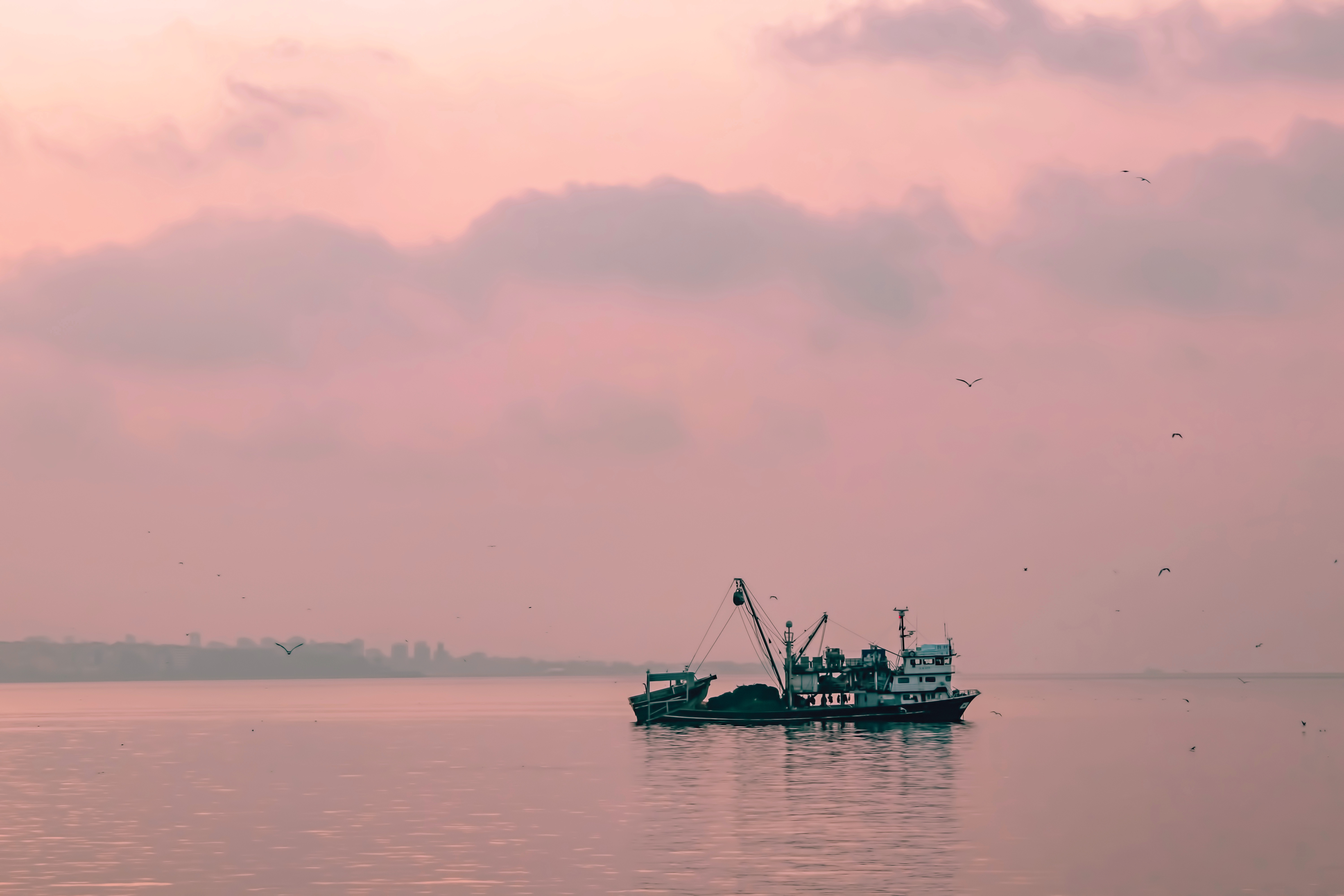
Bottom trawling along Europe’s continental shelf has been a mainstay of commercial fishing for centuries. The practice targets bottom-dwelling fish, crustaceans, and bivalves, supplying restaurants, supermarkets, and seafood supply chains across the continent.
However, dragging weighted nets across the seabed comes with significant environmental consequences. Researchers have linked bottom trawling to habitat destruction, biodiversity loss, carbon release from disturbed sediments, and high bycatch rates.
A recent paper by Millage et al. (2026) attempted to quantify those trade-offs directly, carrying out a broader accounting of the economic benefits and environmental costs associated with bottom trawling across Europe.
Bottom trawling is environmentally destructive but it’s also economically valuable
Bottom trawling is not a small-scale fishing practice operating at the fringes of the economy. Globally, bottom trawl and dredge fisheries account for around one-quarter of wild-caught fish and shellfish. Across Europe, the industry supports thousands of jobs and entire food production systems. It’s big business.
Giving it up would almost certainly cause economic waves, particularly for fishing-dependent communities already struggling under financial pressure.
At the same time, the environmental costs are becoming harder to ignore. It’s among the most destructive food harvesting systems in the world. Bottom trawls indiscriminately harm seabed habitats, reducing ecosystem complexity, and cause permanent changes to marine communities. Bottom trawl fishers also produce significant bycatch. Some estimates place discard and non-target catch rates between 31% and 55% of total catch.
That conflict makes trawling a powerful example of a nature-related financial risk: an industry generating immediate economic value while responsible for larger long-term costs to marine ecosystems and the climate.
The researchers didn’t just look at fishing revenue, they tried to price the wider system
Most accounts of bottom trawling look at the profits and employment value. Advocates emphasise job creation, food production systems, and a steady supply of fish.
This paper took a wider view, assessing both private benefits and public costs. From fishing profits, employment opportunities, and protein supply to discards, subsidies, and CO2 emissions, they pulled all the available data into a comprehensive review of the entire sector. The findings were surprising.
The private industry gains remained positive. Fishing subsidies genuinely did support local jobs, helping local fishermen and larger companies stay afloat while supporting coastal economies. From this perspective, conventional arguments made sense.
However, the private gains were dwarfed by the societal costs. The researchers estimated an annual net societal impact between -€2.07bn and -€15.97bn. A significant proportion of that cost came from the carbon released when trawling disturbs marine sediments, where it has been stored for thousands of years. In short, the costs change dramatically once the seabed enters the equation.
That said, carbon modelling is inherently uncertain. The authors were quick to point out the challenges in estimating the economic costs of carbon release.
This is really a conversation about externalities
The bigger conversation here is one of externalities. Previously, companies have highlighted the economic benefits of their activity, while leaving the societal costs out of the financial picture entirely. They’re “external” to the organisation.
That could be a polluted river, damage to human health, or devastation of a marine ecosystem. Indeed, this conversation is occurring in other industries, whether it’s water scarcity or supply chain fragility.
The question is, who absorbs the long-term cost? Is something really profitable and worthwhile if it undermines future prosperity?
The difficult part is that there are no cost-free transitions
Even acknowledging the paper’s conclusions, there’s no easy route forward. Bottom trawling might cause ecosystem damage and increase the harm from climate change, but eliminating it would harm fishing communities that are already economically fragile.
Which raises a bigger question: who do organisations need in the room to navigate this?
It’s not just governments facing these questions. Companies across the entire economy are struggling with questions about externalities, long-term costs, and nature-related financial risks.
The solution isn’t passing the problem onto the next generation. It comes from hiring the right talent and leadership who don’t treat the challenge of creating environmenatlly positive business models as an afterthought. Leaders need to understand systems-level risks, navigate uncertainty, and balance commercial and societal outcomes.
Questions like bottom trawling may seem specific to fisheries policy. In reality, they reflect a much broader challenge: whether organisations have the right people in the room to recognise long-term risks before they become much larger economic problems.
FAQs
Got A Question?
Everything you need to know about impact careers, sustainable job opportunities and our talent network in one easy place.
Our House Views content library and Awareness to Action series share insights on sectors, roles and career moves. Many candidates use these resources to narrow their focus before speaking with us.
Because the numbers are clear. Green and transition sectors are growing faster than the rest of the economy, attracting capital, talent and innovation. Positioning yourself there is a commercial decision, not just a values one.
Awareness to Action is our interview and insight series. We speak with leaders across the impact economy and turn real conversations into practical guidance for careers, teams and capital.
Yes, we regularly feature impact investors, founders and sustainability leaders in interviews and House Views content. If you have something valuable to share with the impact economy, we would love to hear from you.