Extreme Heat Is Not the Only Climate Shock


Sweltering summer temperatures are currently dominating the headlines. Compared with the 1991–2020 average, Western Europe was just over 3°C warmer than usual in June 2026, making it the region's hottest June on record.
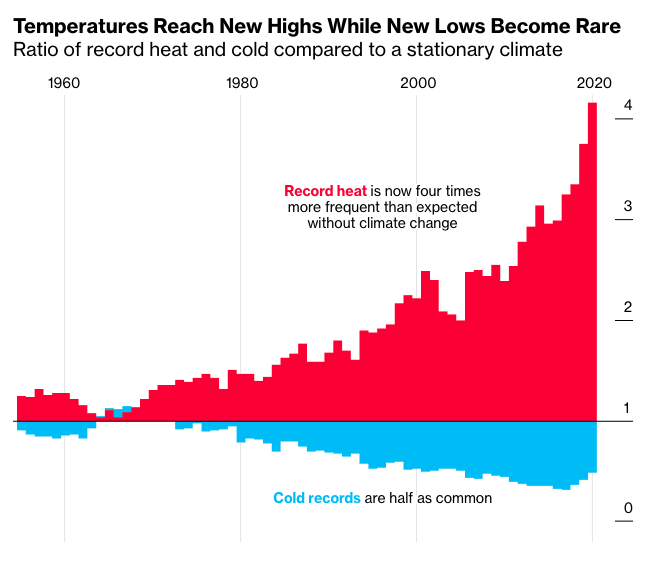
According to research published in Nature, record heat is now four times more frequent than would be expected without climate change, while cold records have become half as common.
Yet even as temperatures soar, it is the ripple effect that most concerns scientists. Extreme heat can be the harbinger of flooding, crop losses, wildfires, infrastructure strain, and, if disruption becomes persistent, civil unrest.
The global economy can absorb mild climate shocks. What becomes harder to manage is abnormal weather without relief. Research suggests the cumulative economic costs of worsening climate disruption could reach tens of trillions of dollars by mid-century. That is the kind of risk only a handful of forward-thinking organisations, and the people inside them, will be ready to respond to.
The real shock is how many systems are changing at once
Heatwaves are becoming an annual occurrence. Because everyone feels the temperature spike, they dominate the headlines. They are, however, only the most visible part of a broader disruption.
Marine heatwaves, more powerful storms, drought, flooding, food system disruption, and infrastructure stress are all part of the same story. For example, UK waters are currently experiencing a significant marine heatwave, with parts of the North Sea forecast to reach around 4-5°C above average. Such high temperatures can harm marine ecosystems and commercially important fish and shellfish.
More broadly, most infrastructure is designed for a narrow temperature range. If temperatures can swing from sub-zero in the winter to mid-30s in the summer, railway tracks can buckle, tarmac can melt, and entire supply chains can clog. No one is immune.
How climate risk travels across borders and markets
No one can predict how the cascade of climate risk will play out. We have already seen how one shock can travel across borders. In 2010, a brutal Russian heatwave and drought devastated wheat production. When the government banned exports, the pressure moved quickly through global food markets and into bread-importing countries across the Middle East and North Africa. Researchers at the Center for American Progress and the International Institute for Strategic Studies have argued that climate did not cause the Arab Spring by itself, but that it may have made it come earlier by loading the conditions that made unrest harder to contain.
It is just one case study demonstrating the ripple effects of extreme weather events on an interconnected global economy.
Understanding these new global risks means integrating sustainability into every aspect of an organisation's operations. Modern sustainability draws upon climate risk analysis, energy systems, supply chain resilience, cooling and infrastructure technology, and adaptive planning.
Resilience and fast decisions matter more than promised returns
What happens when a key railway line buckles due to extreme heat? Or a crop failure in one country causes instability in another part of the world? Depending on the organisation, the answer could either be chaos or a new plan.
When everything feels chaotic or unpredictable, the biggest winners aren't necessarily the ones promising the biggest return on investment. They're the most resilient: the ones built for adaptability, continuity, and fast decision-making when normal assumptions fail.
Success in these organisations will not be limited to those with climate job titles. Professionals across finance, operations, engineering, technology, and logistics all have a role to play. What will unite them is their quick thinking, forward planning, and understanding the scale of the problem.
Where skilled professionals can make a real difference
Reading about climate risk is concerning. Yet any challenge also creates opportunities for those willing to rise to the occasion.
Adaptation, management, and mitigation are not abstract ideas. They are practical problems that need solving. Someone has to redesign supply chains, secure investment, improve infrastructure, build better data tools, manage risk, communicate trade-offs, and turn plans into action.
For professionals, that raises a more personal question: are your skills being used effectively where you are now?
If you understand finance, operations, engineering, technology, logistics, policy, investment, or commercial growth, your experience may be more useful than you realise. The issue is whether it is being spent on work that will matter in the future.
The work is difficult, uncertain, and often higher-risk than staying on a familiar path. However, for the right person, that is part of the appeal. It offers the chance to help organisations solve real problems, not just talk about them.
FAQs
Got A Question?
Everything you need to know about impact careers, sustainable job opportunities and our talent network in one easy place.
Our House Views content library and Awareness to Action series share insights on sectors, roles and career moves. Many candidates use these resources to narrow their focus before speaking with us.
Because the numbers are clear. Green and transition sectors are growing faster than the rest of the economy, attracting capital, talent and innovation. Positioning yourself there is a commercial decision, not just a values one.
Awareness to Action is our interview and insight series. We speak with leaders across the impact economy and turn real conversations into practical guidance for careers, teams and capital.
Yes, we regularly feature impact investors, founders and sustainability leaders in interviews and House Views content. If you have something valuable to share with the impact economy, we would love to hear from you.