Planetary Boundaries: Why Crossing 7 of 9 Should Concern Us

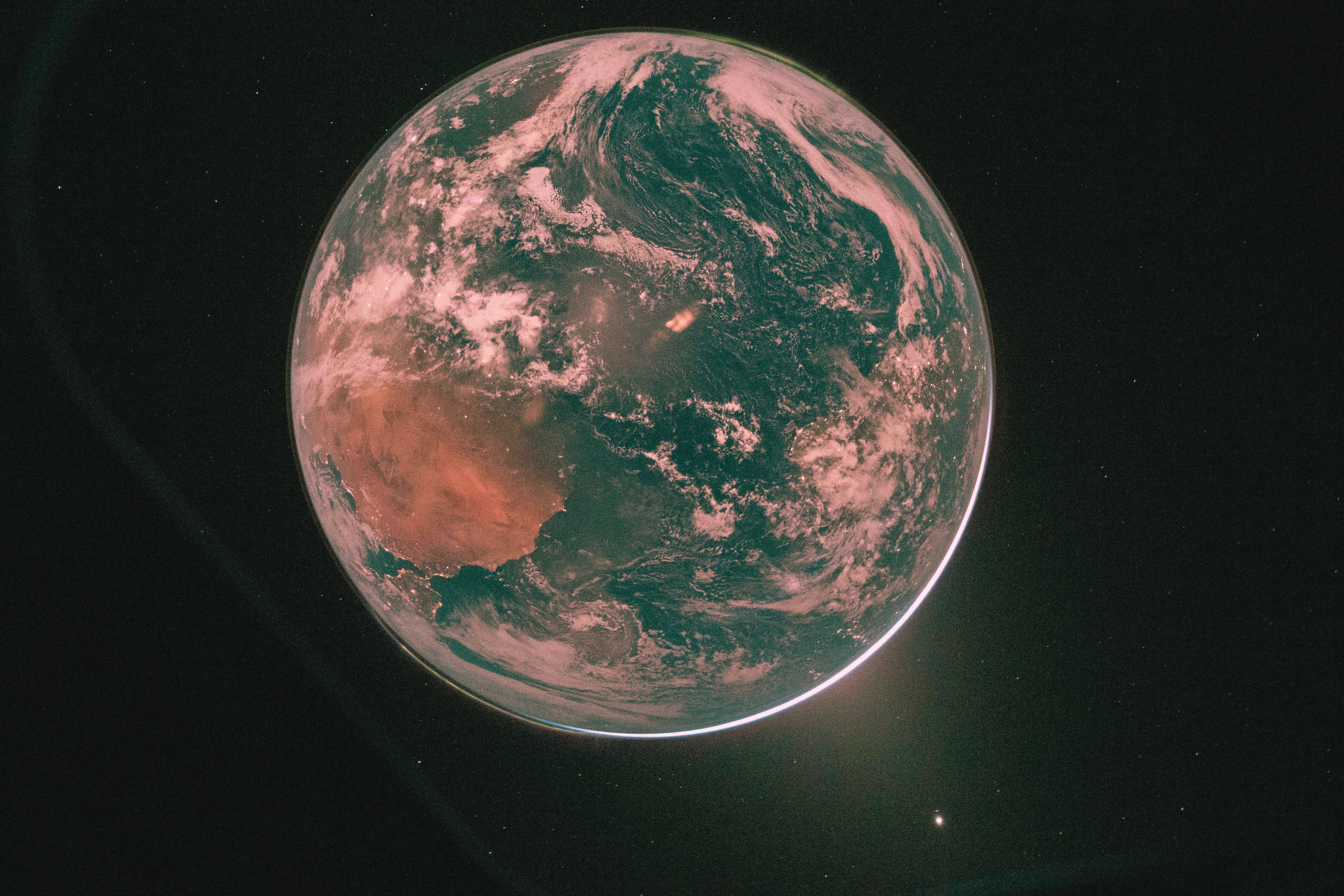
Humanity has now crossed 7 of the 9 planetary boundaries, pushing beyond its “Safe Operating Space.” These boundaries represent the environmental conditions that allowed civilisation to develop safely, including climate change, biodiversity loss, freshwater disruption, land-system change, and novel entities like plastics and chemicals.
Think of the planet like a Jenga tower. The tower needs most of its blocks to stay standing, though remove one or two and things can appear to continue as normal. Keep taking blocks out, and eventually collapse is inevitable.
Each planetary boundary represents a block in the tower and we’ve removed over two thirds of them, prompting unprecedented change in the Earth’s climate. The framework for planetary boundaries was originally designed as a scientific warning system. However, it is also becoming an early warning signal for longer-term economic and societal risk.
Every system has limits, The Earth is no exception
The Earth does not behave like a production line, where one failure brings everything down. It is a non-linear system, with multiple factors feeding into each other, which makes it both more resilient and less predictable.
The ‘Planetary Boundaries’ concept was developed in 2009 by a group of scientists to help us understand the foundations of the Earth system. It defined nine boundaries: Climate, biosphere, land use, freshwater, nutrients, ocean pH, aerosols, ozone and pollution.
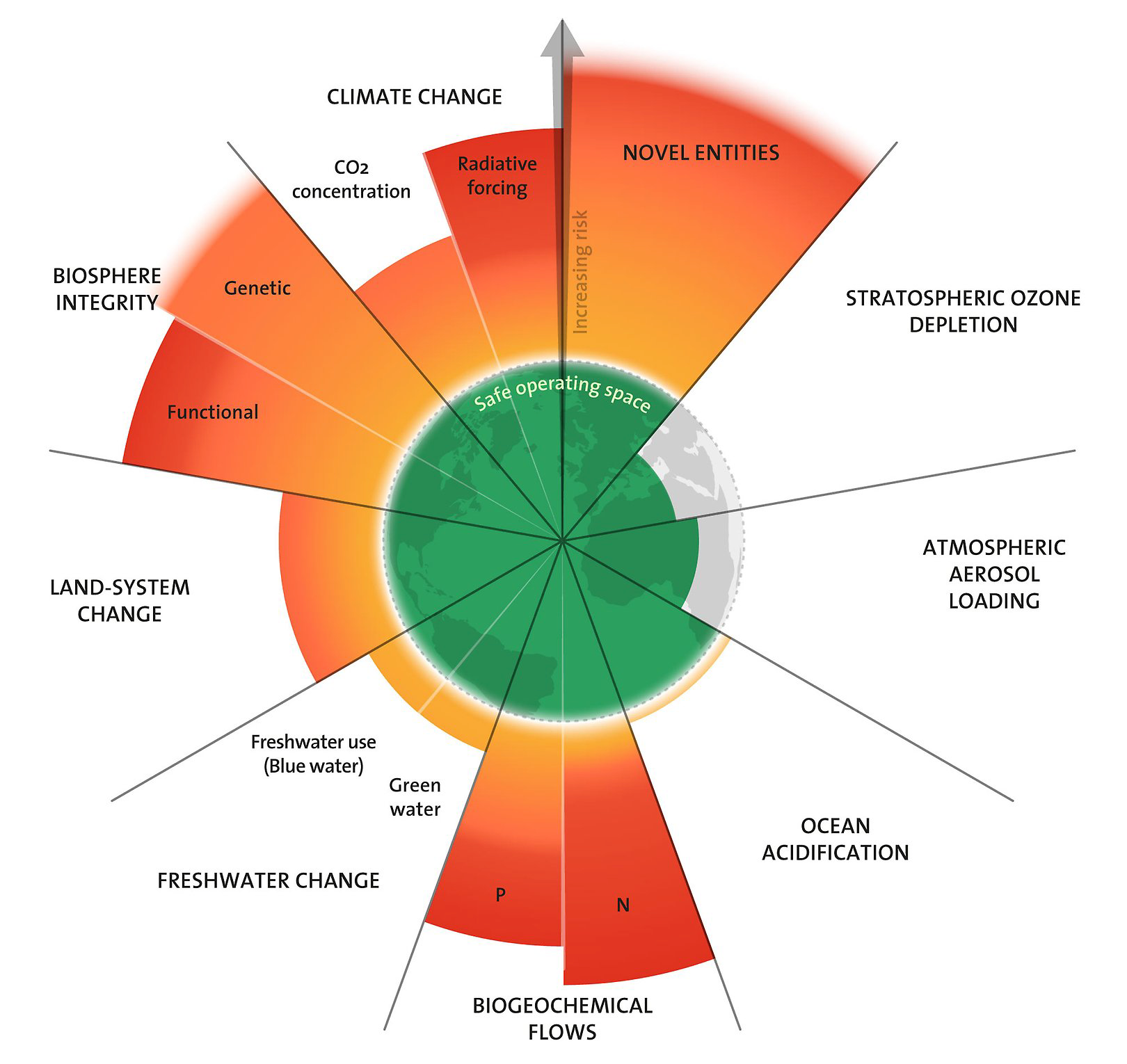
Presently, only ozone and aerosols remain within the Safe Operating Space. Existing outside this zone doesn’t mean immediate collapse. However, it does mean the planet will become an increasingly less stable place to live. In short, the system will bend before it breaks.
Some boundaries are becoming harder to separate from the economy
The assumption that the economic system could operate independently of environmental damage has broken down. What were once treated as peripheral environmental concerns are now affecting the foundations of economic activity itself.
For example, biodiversity loss affects agriculture and food systems, from the loss of pollinators forcing farmers to hand-pollinate crops, to the introduction of invasive species with no natural predators to control their populations.
Other links between the environment and economics include:
- Freshwater stress affects manufacturing and energy
- Climate instability affects insurance and infrastructure
- Chemical pollution impacts regulatory and healthcare costs
- Land degradation disrupts food and agricultural supply chains
The challenge is that modern economies were built for short-term optimisation
Modern economies developed under the assumption of environmental stability, that no matter how much humanity extracted from natural systems, those systems would continue to function unaffected.
Quarterly incentives and growth-focused systems might work in the short term. Beyond the balance sheet, however, environmental and social costs accumulate slowly, becoming more disruptive over time. By the time markets are forced to respond, it can be too late.
Civilisation became extremely good at extracting value from stable systems, but stability is no longer guaranteed.
The problem can only be solved by the right people
The economy won’t change on its own. Companies, governments, and every other organisation can only adapt with the help of the right people at every level. At the top, leaders need to be systems thinkers, prioritising future prosperity and navigating uncertainty rather than focusing on quarterly reports. It’s a careful balance between resilience and profitability.
Meanwhile, operational leaders, investors, consultants, and policymakers need to understand how environmental pressures ripple through supply chains, infrastructure, financial systems, and long-term economic stability. Businesses that fail to adapt to those pressures may find themselves reacting too late, after environmental strain has already translated into economic instability, rising costs, or disrupted markets.
The biggest risk may not be crossing the boundaries, totally ignoring them definitly is
We’ve all ignored warnings before. Maybe it was a crack in the wall we kept meaning to fix, a flashing light on our car’s dashboard, or words of wisdom from a friend. It never ends well.
Planetary boundaries aren’t a precise countdown clock. Like that flashing dashboard light, they can’t tell you when the planet will break down, but they do indicate something is wrong.
The warning light is on. The organisations that act now will be better positioned than those waiting for a breakdown.
FAQs
Got A Question?
Everything you need to know about impact careers, sustainable job opportunities and our talent network in one easy place.
Our House Views content library and Awareness to Action series share insights on sectors, roles and career moves. Many candidates use these resources to narrow their focus before speaking with us.
Because the numbers are clear. Green and transition sectors are growing faster than the rest of the economy, attracting capital, talent and innovation. Positioning yourself there is a commercial decision, not just a values one.
Awareness to Action is our interview and insight series. We speak with leaders across the impact economy and turn real conversations into practical guidance for careers, teams and capital.
Yes, we regularly feature impact investors, founders and sustainability leaders in interviews and House Views content. If you have something valuable to share with the impact economy, we would love to hear from you.