Tropical Rainforest Loss: Good News, But Fire Is Rising

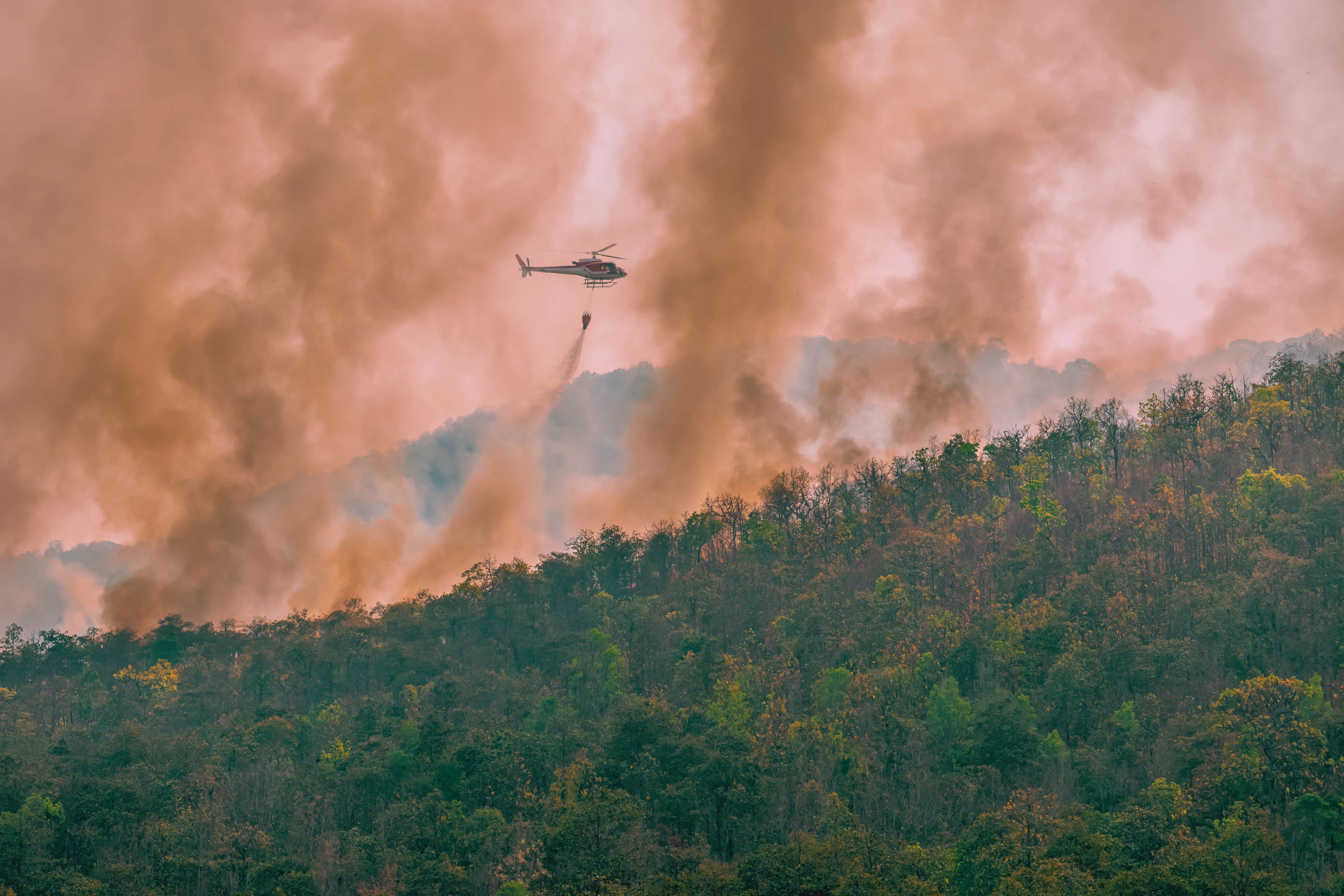
Good news: The Global Forest Review has reported that tropical rainforest loss fell 36% from 2024 to 2025. In countries like Brazil, Colombia, Indonesia, and Malaysia, the rate of forest loss slowed significantly.
That said, don’t celebrate too quickly. The world still lost 4.3 million hectares of tropical primary forest in 2025 (equivalent to 11 football fields per minute). A significant and growing share of that loss is being driven by fire, as rising temperatures make forests more vulnerable to ignition and drought. Just as governments are beginning to get their act together and improve forest governance, climate change itself is making forests harder to protect.
Some countries are proving that forest loss can be reduced surprisingly quickly
Brazil is leading the pack in protecting rainforests. The nation famed for the Amazon rainforest saw a 42% reduction in primary forest loss under the policies of the Lula administration. That Brazil still leads in total forest area lost is a consequence of the scale of the Amazon rainforest rather than policy failure.
Other countries are also doing their part. Colombia is empowering indigenous communities and improving cattle traceability, helping to safeguard the northern reaches of the Amazon. Across the Pacific, Indonesia and Malaysia also slowed loss, backed by government commitments to maintain minimum levels of forest cover. In both nations, mining and palm oil production continue to play a role in forest loss. However, Malaysia, in particular, is working to limit palm oil expansion into forest areas.
Climate change is making forests more vulnerable almost everywhere
It’s almost a cruel twist of fate that just as governments get their act together, nature presents a new systemic risk. Fires accounted for 42% of global tree cover loss in 2025. In fact, the last three years saw more than double the fire-driven forest loss of two decades ago.
The cause is clear: rising temperatures increase the frequency of drought, creating conditions in which a single spark can ignite vast swathes of forest within days. The risk is not confined to the tropics. Canada, Alaska, Southern Europe, and the world's boreal forests are all increasingly susceptible, as warming extends the conditions that make wildfires more likely and more severe.
The progress on governance shows that political will can make a real difference. The harder challenge is that fire risk operates outside the reach of policy in ways that deforestation does not.
What does this mean for businesses and investors
Forest loss is no longer just an environmental issue. The growing scale of wildfires means the risks are now commercial and financial, touching nearly every part of the global economy.
These risks can emerge through:
- rising food and commodity prices
- disrupted agricultural supply chains
- insurance losses from extreme fire events
- declining carbon sink capacity
- political instability tied to land and resource pressure
- growing regulatory and investor scrutiny
The challenge is that these pressures rarely emerge all at once. They build gradually, which means they can be absorbed or deferred until the combined effect becomes a much larger problem than it would have been had it been addressed earlier.
Businesses and investors capable of understanding systems-level risk can appreciate the dangers. Seemingly abstract environmental risks stop looking like compliance exercises and start looking like real commercial threats. The organisations that adapt best will likely be the ones able to recognise long-term environmental pressures before they become much larger economic problems.
Forest protection is a capability question
The 2025 findings show that deforestation driven by human activity can be reduced through improved governance. The harder problem is fire risk. Fire risk is more complicated to solve than anthropogenic deforestation. It is driven by temperature, drought, and atmospheric conditions that are the cumulative result of decades of emissions. The organisations and governments best placed to navigate what comes next are those that treat fire risk not as a weather event but as a systemic, compounding threat to supply chains, infrastructure, carbon markets, and long-term investment value.
That requires hiring and promoting people who understand systems-level risk, can think across sectors and time horizons, and are not waiting for a crisis before they act.
FAQs
Got A Question?
Everything you need to know about impact careers, sustainable job opportunities and our talent network in one easy place.
Our House Views content library and Awareness to Action series share insights on sectors, roles and career moves. Many candidates use these resources to narrow their focus before speaking with us.
Because the numbers are clear. Green and transition sectors are growing faster than the rest of the economy, attracting capital, talent and innovation. Positioning yourself there is a commercial decision, not just a values one.
Awareness to Action is our interview and insight series. We speak with leaders across the impact economy and turn real conversations into practical guidance for careers, teams and capital.
Yes, we regularly feature impact investors, founders and sustainability leaders in interviews and House Views content. If you have something valuable to share with the impact economy, we would love to hear from you.