Vertical Floating Solar: Germany's Clean Energy Asset
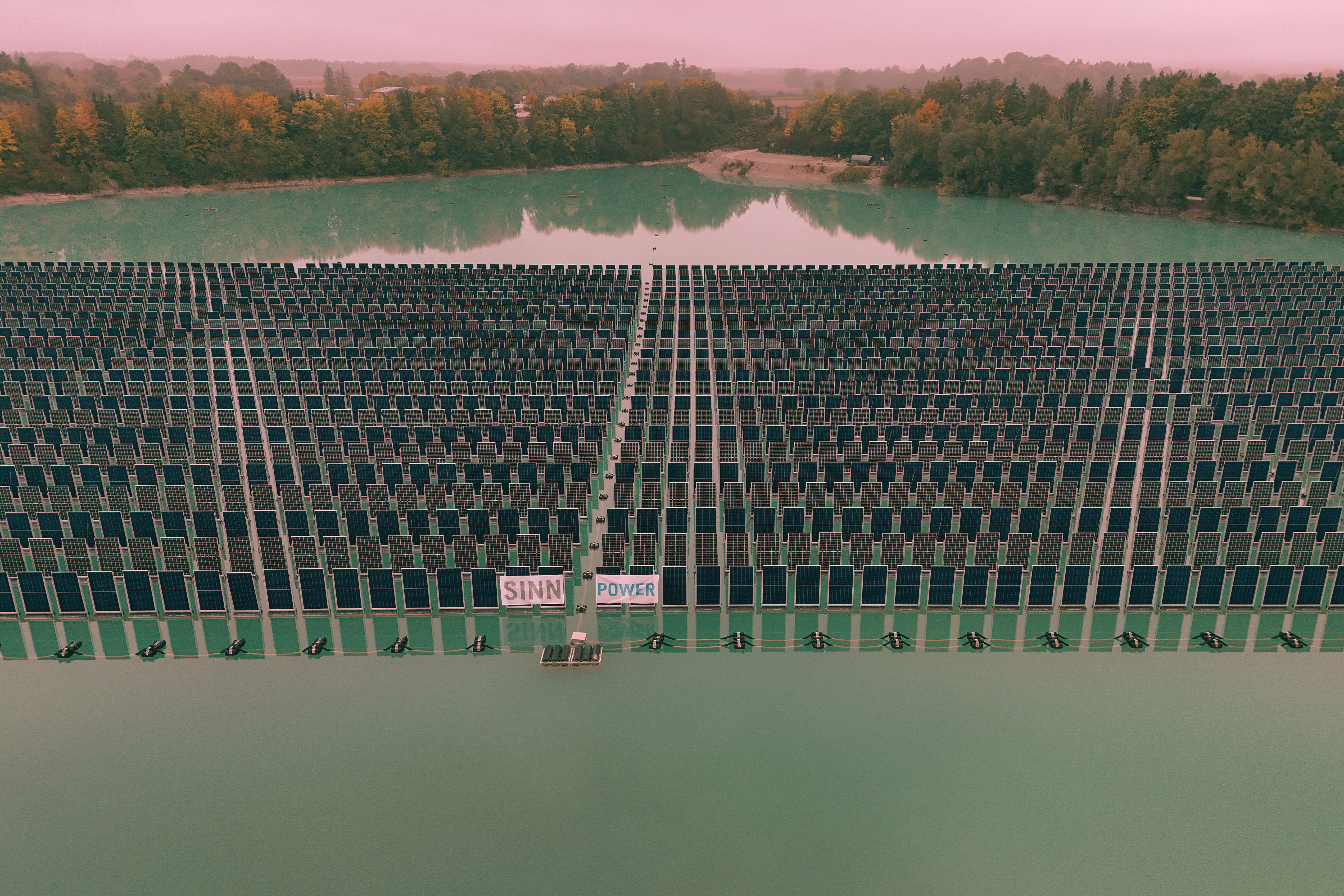
A gravel pit in Bavaria has just become something more valuable than a worked industrial site. It is now an energy-producing asset. Vertical floating solar has moved beyond a niche engineering idea to prove itself a workable business model, with live customer use cases, measurable output, and a credible path to scale. In floating solar in Germany, where projects are regulated on location and surface coverage, the question has shifted from 'Can this work?' to 'Who can scale it well?
A Gravel Pit Becomes a Clean Energy Asset
SINN Power commissioned a 1.87 MW plant at the Jais gravel pit in the Starnberg district, expected to produce 2 GWh of electricity a year while covering only 4.65% of the lake's surface. The plant supplies electricity directly to the gravel pit's own industrial operations, reducing how much power the site draws from the national grid. During initial operation, grid electricity consumption fell by nearly 60%, with a second 1.7 MW phase already planned. Power density, self-consumption, and the ability to expand in phases are what make the asset valuable. For impact investors, infrastructure funds, and sustainability-led operators, that is the point at which innovation starts to look like disciplined execution.
How the Technology Works
The commercial case for vertical floating solar rests as much on how it works as on where it can be built. The SKipp design uses vertical east-west modules, open water corridors, and a keel-like structure that handles wind loads and changing water levels. This orientation generates more consistent power throughout the day, with stronger output during morning and evening hours than conventional systems deliver. Consistent output across the day improves the economics of self-consumption and reduces pressure on the local grid.
The Capability Question
Floating solar in Germany is moving from novelty to pipeline. As it does, the capability question becomes specific. Who does a company need to make projects like this work at scale?
Investment leaders who can assess unfamiliar technical risks without forcing new asset classes into generic infrastructure frameworks. Development and permitting specialists who understand water law, biodiversity requirements, and local approval processes. Commercial operators who can connect asset design to load profiles, electricity pricing, and on-site offtake. Product and engineering leaders who can translate reliability and maintainability into consistent returns.
A promising asset class does not move from pilot to portfolio without people who can do each of these things well. The technology exists. The regulatory framework exists. The constraint, as with most emerging clean-tech sectors, is leadership and execution.
Conclusion
Vertical floating solar is more than a clean-tech headline. It demonstrates that underutilised industrial water bodies can become productive infrastructure when engineering, regulation, and commercial logic align. The Jais gravel pit is a useful illustration: a working industrial site that has reduced its energy costs, increased its energy independence, and added a revenue-generating asset without disrupting operations. The commercial case reinforces the environmental one, and vice versa. Germany alone has thousands of artificial lakes that could, under the right conditions, generate gigawatts of power. The constraint is unlikely to be surface area. As the sector develops, the organisations that matter most will be those that combine technical judgment, capital discipline, and mission-driven execution from the outset.
FAQs
Got A Question?
Everything you need to know about impact careers, sustainable job opportunities and our talent network in one easy place.
Our House Views content library and Awareness to Action series share insights on sectors, roles and career moves. Many candidates use these resources to narrow their focus before speaking with us.
Because the numbers are clear. Green and transition sectors are growing faster than the rest of the economy, attracting capital, talent and innovation. Positioning yourself there is a commercial decision, not just a values one.
Awareness to Action is our interview and insight series. We speak with leaders across the impact economy and turn real conversations into practical guidance for careers, teams and capital.
Yes, we regularly feature impact investors, founders and sustainability leaders in interviews and House Views content. If you have something valuable to share with the impact economy, we would love to hear from you.