Circularity Looks Different in Every Industry
The modern economy is largely linear. It uses resources as inputs, turns them into products, and often designs those products to be replaced once they wear out or break. The circular economy works differently. Products are designed with their next use in mind, whether that means reuse, repair, refurbishment, remanufacturing, or repurposing.
The idea can seem abstract until you look at real companies putting it into practice. It is the difference between a kitchen measuring wasted food, a manufacturer redesigning products for remanufacture, a fashion company making clothes easier to recycle, or an electronics business building reverse logistics into the supply chain.
These changes happen when talented teams step back and rethink the company’s role in the wider economy. That involves operations, design, procurement, logistics, finance, customer behaviour, and commercial strategy.
HP Brazil and Sinctronics Built the Missing Return System
The circular economy often begins with logistics. Think of a supply chain as a linear system:
Inputs → Production → Outputs
The circular economy adds another arrow, turning outputs back into inputs. They may not return to the same industry, but they still reduce the need for fresh resources. On paper, that arrow looks simple. In practice, it only works if the used product is physically collected and entered back into the system, which is exactly the gap HP Brazil and Sinctronics set out to close.
HP Brazil and Sinctronics' partnership combined HP's customer reach with Sinctronics' recovery and manufacturing expertise. It cut the time needed to collect end-of-life electronic products by 50%, reduced Sinctronics' clients' costs by up to 30%, and returned 97% of collected materials and components into supply chains.
Caterpillar Designs Machinery With a Second Life in Mind
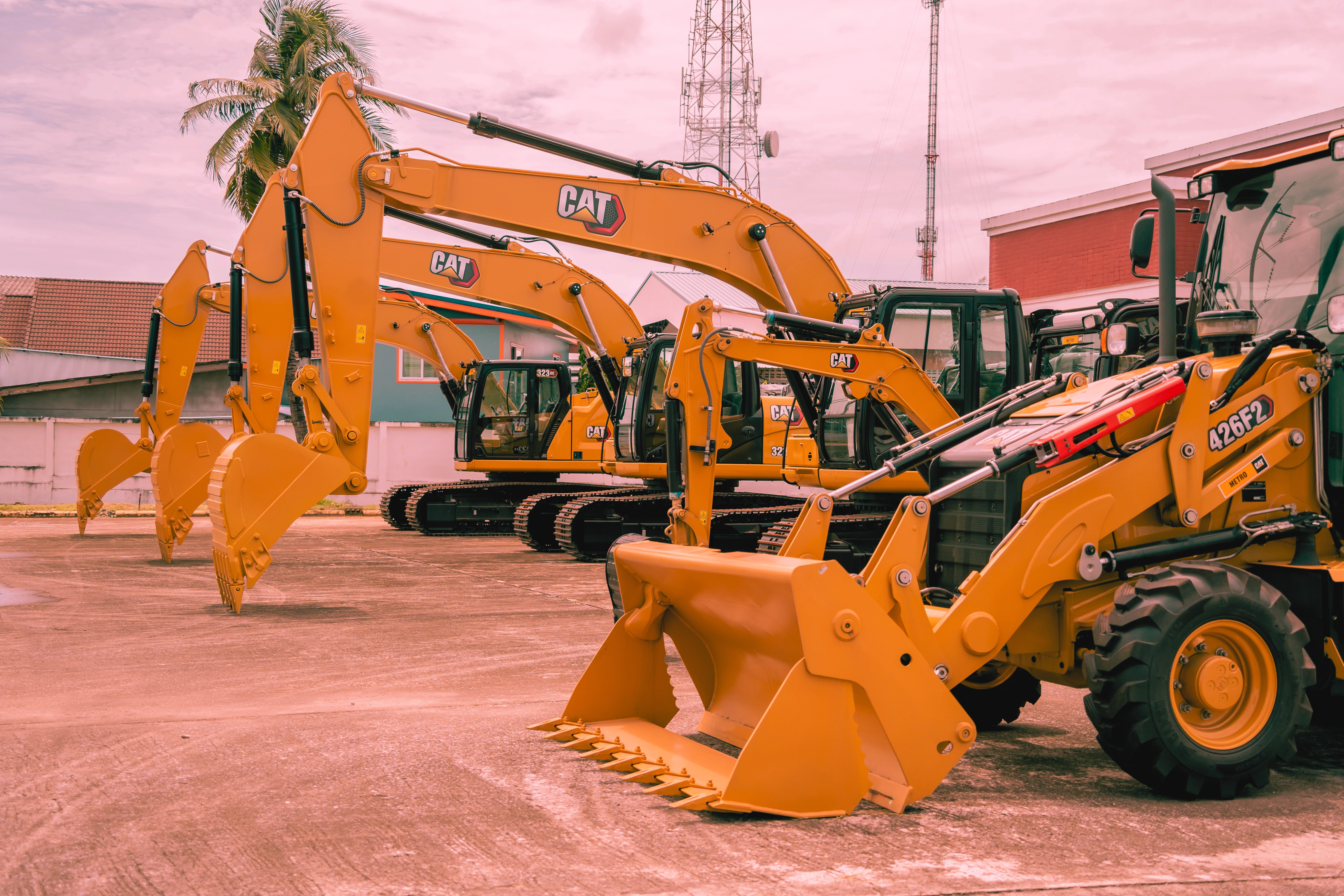
Caterpillar shows circularity in a very different form: remanufacturing.
In heavy machinery, the most valuable materials are often already sitting inside used engines, drivetrains, gearboxes, and components.
Since 1973, Caterpillar has built deep expertise in this area, growing its remanufacturing operation to nine global locations and more than 3,600 people.
The company learned that different product types lend themselves to different parts of the circular economy. Gearboxes, drivetrains, and brakes can often be repaired and upgraded, while other components can be disassembled for parts.
Real progress in circularity depends on cooperation between engineers, product designers, and service teams. Working together, they can design components for reuse, identify which materials can be recovered, and make second-life value part of the product from the beginning.
Winnow Turns Food Waste Into Management Data
Food waste is rarely the first area people turn to when they think of circularity, and it works differently from the other examples in this article. Rather than closing a loop by returning materials to use, Winnow tackles the first principle of the circular economy: eliminating waste before it happens. The Ellen MacArthur Foundation notes that commercial kitchens can throw away up to 20% of purchased food, and the UN estimates that a third of all food produced globally is lost or wasted, worth an estimated $1 trillion each year.
Winnow helps food businesses understand how much food is wasted and what type. Alongside other information such as food sales during the same period, it helps kitchens make tangible changes to menu design, preparation, and ordering that minimise waste at the source.
The results are substantial. Winnow's technology now serves more than 1,400 businesses worldwide, saving the equivalent of 36 million meals a year from the bin, and generating $43 million in food cost savings for its clients.
Fashion Needs Circularity Before the Garment Is Made
Fashion is one of the worst offenders of the "make and break" modern economy. Fast fashion creates clothes that fall apart within a few years, but cost so little it doesn't matter to the consumer. Manufacturers can improve clothing quality and build longer product lifespans. Another option is to use heat-dissolvable threads that make recycling easier.
Resortecs developed heat-dissolvable threads that allow garments such as jeans and jackets to be dismantled more easily for recycling. This is important because less than 1% of garments are currently recycled to high quality, and disassembly is often too manual, costly, and wasteful to scale. Resortecs' process allows up to 500 kg of garments to be dismantled at once and can make disassembly up to 15 times faster.
Resortecs is a good reminder that circularity doesn't always require a grand redesign. Sometimes it begins with a thread.
The Career Lesson Behind These Circular Economy Case Studies
For anyone thinking about their career, this is the interesting part. Circularity rewards people who notice the hidden friction or who can tweak a tiny design choice to make reuse possible. Such work needs people who can look at an ordinary product and ask what happens to it next. As the old saying goes, one man's rubbish is another man's treasure.
FAQs
Got A Question?
Everything you need to know about impact careers, sustainable job opportunities and our talent network in one easy place.
Our House Views content library and Awareness to Action series share insights on sectors, roles and career moves. Many candidates use these resources to narrow their focus before speaking with us.
Because the numbers are clear. Green and transition sectors are growing faster than the rest of the economy, attracting capital, talent and innovation. Positioning yourself there is a commercial decision, not just a values one.
Awareness to Action is our interview and insight series. We speak with leaders across the impact economy and turn real conversations into practical guidance for careers, teams and capital.
Yes, we regularly feature impact investors, founders and sustainability leaders in interviews and House Views content. If you have something valuable to share with the impact economy, we would love to hear from you.