Land-Use Change Creates Real Financial Risks

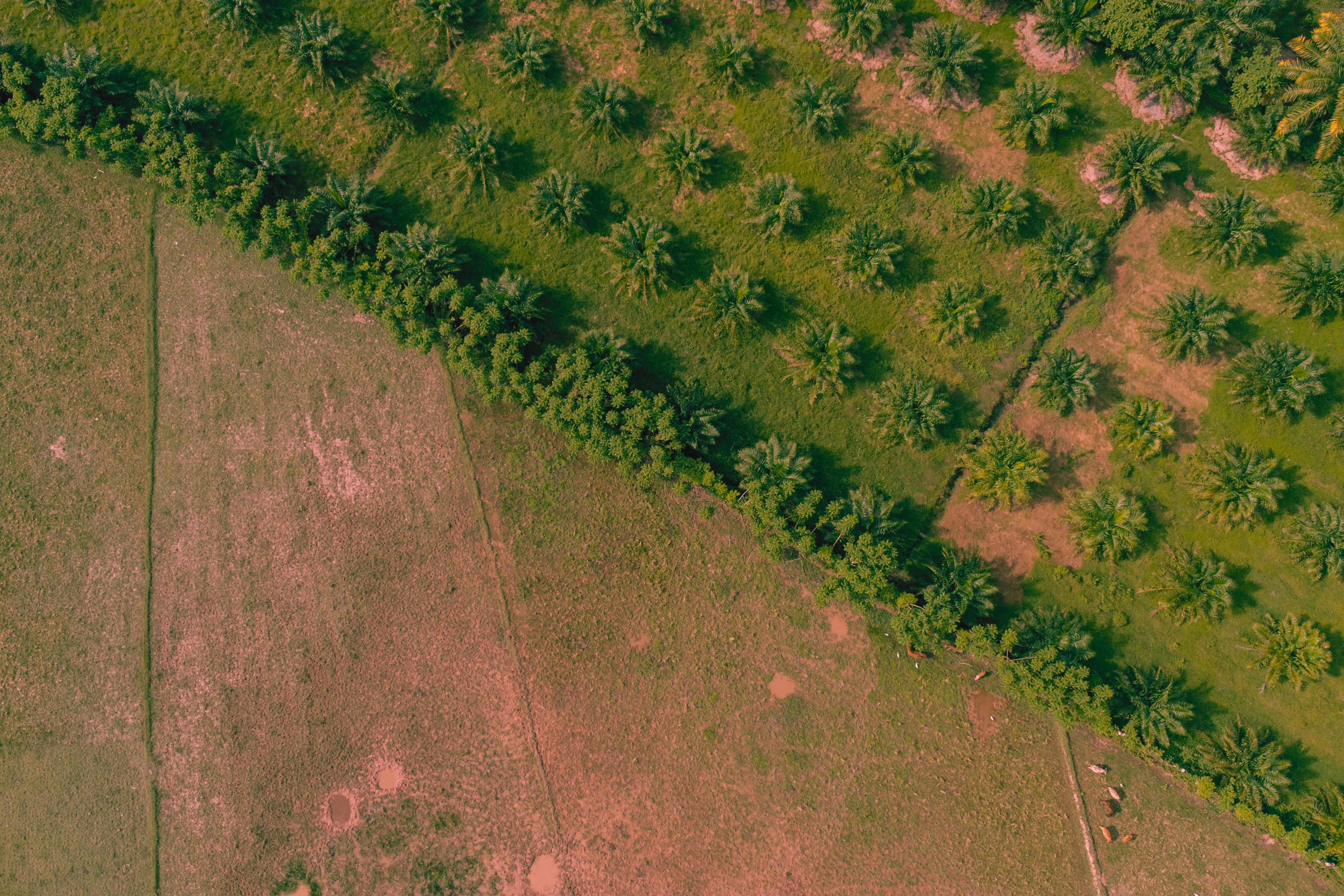
For millennia, people rarely thought twice about changing how we used land. Forests were cleared for agriculture, wetlands were drained, and new towns were built. Only recently have we begun to appreciate the environmental and economic costs of land-use change.
Ecosystems are almost never thought of as infrastructure. However, forests, wetlands, floodplains, and natural habitats perform some of the most important functions. Removing them can increase flooding, drought, fire, and pollinator loss.
Land-use change and climate change tend to compound each other. Removing a wetland or floodplain weakens the natural buffer that would otherwise absorb some of the impact of a flood, so when a climate-driven event occurs, the damage is worse than it would have been with the ecosystem intact. That interaction makes it genuinely difficult to work out how much of a given economic cost came from the land-use change itself, and how much came from the climate event it amplified. Even so, rising costs are causing some businesses to reconsider the economic calculus of how land is used.
Land-Use Change Turns Natural Protection into Financial Exposure
The Taskforce on Nature-related Financial Disclosures (TNFD) published a 2025 report called Evidence Review on the Financial Effects of Nature-Related Risks. A dedicated section of the report focused on the costs of changing ecosystems without sufficient forethought. The report traced those costs across several distinct areas, from flood damage and lost agricultural output to disrupted energy supply and the financial risk now emerging from land-use regulation itself.
Removing Wetlands and Mangroves Raises the Cost of Flooding
Urban centres have a tendency to sprawl. As marginal land increases in value, developers may build on floodplains. The obvious problem is that when waters rise, the floodwater has to go somewhere. Even when artificial flood defences are built, the risk of periodic flooding remains.
Perhaps the most famous example is New Orleans. The damage caused by Hurricane Katrina was estimated at $125 billion. While much of the disaster is associated with climate change, the conversion of land to urban areas removed natural buffers that could have protected parts of the city.
Large parts of Brisbane, in Southeast Queensland, were built on floodplains in much the same way. The 2022 Southeast Queensland floods caused AUD7.7 billion in damage. More than 97,000 residential and commercial claims were made, while 62% of affected businesses were forced to close temporarily. In response, the Resilient Homes Fund began buying back homes built on floodplain land and rezoning it as non-habitable, moving people and property out of areas that should never have been built on in the first place. As of December 2025, 685 buybacks had been completed.
Deforestation Can Reduce Farm and Hydropower Revenue
Forests recycle moisture, influence rainfall, retain soil, and regulate river flow. Clearing land does not just make room for agriculture. It also eliminates these vital ecosystem services.
In Brazil, deforestation in the Xingu Basin has been linked with a 6% to 36% reduction in hydropower energy supply. Elsewhere in the Amazon, the Teles Pires hydropower plant has seen average energy generation fall by between 2.5% and 10%, a loss equivalent to almost 10% of its annual revenue.
The effect on farming is just as direct. In regions of Brazil where more than 80% of the area has been deforested, farmers now experience a rainfall delay of two weeks every five years, caused by the loss of tree cover itself. Between 2006 and 2019, that delay contributed to $760 million in lost soybean production and $270 million in lost corn production.
Land Management Can Make Fires and Storms More Expensive
Even where humans try to mimic the original ecosystem, what results is often less diverse and resilient than what it replaced.
Monocrop tree plantations, for example, provide weaker flood and fire protection than native habitats. Reduced undergrowth and smaller root networks mean they retain less water than native forests.
During Cyclone Gabrielle in New Zealand in 2023, accumulated dead wood and forestry waste quickly made their way into rivers, exacerbating the storm's effects. Insurance claims reached a record NZD2.1 billion, while the disaster was estimated to increase inflation by 0.3%.
Deforestation Rules Are Turning Land Conversion into Market Risk
Land-use change does not have to cause a flood or a fire to create financial risk. From 30 December 2026, the EU Deforestation Regulation will require larger operators dealing in cattle, cocoa, coffee, palm oil, rubber, soy, wood, and certain derived products to demonstrate that they are deforestation-free.
As European importers are forced to trace a bag of coffee or shipment of rubber back to the source, it creates a demand for companies to invest in operational transparency. Organisations will need people capable of mapping supply chains back to their origin, verifying supplier documentation, and building the evidence needed to prove compliance, or to source new suppliers where that proof cannot be found.
Land-Use Risk Careers Sit Between Maps and Money
Until recently, few risk teams asked whether a wetland upstream had been drained or whether a supplier's farm had been carved from native forest. These questions can now affect insurance costs, procurement decisions, and market access directly, and they can affect credit too: a revenue hit like the one at Teles Pires is exactly the kind of thing that shapes a company's ability to service its debt.
The opportunity for career changers sits at this intersection. A procurement specialist can build traceability back to individual farms. A geospatial analyst can identify floodplain development before a lender finances it. An underwriter can account for the loss of wetlands or mangroves instead of treating flooding as purely a weather event.
This is finding where the risk sits, who carries it, and what it could cost.
FAQs
Got A Question?
Everything you need to know about impact careers, sustainable job opportunities and our talent network in one easy place.
Our House Views content library and Awareness to Action series share insights on sectors, roles and career moves. Many candidates use these resources to narrow their focus before speaking with us.
Because the numbers are clear. Green and transition sectors are growing faster than the rest of the economy, attracting capital, talent and innovation. Positioning yourself there is a commercial decision, not just a values one.
Awareness to Action is our interview and insight series. We speak with leaders across the impact economy and turn real conversations into practical guidance for careers, teams and capital.
Yes, we regularly feature impact investors, founders and sustainability leaders in interviews and House Views content. If you have something valuable to share with the impact economy, we would love to hear from you.