Nature Loss Is Increasing the Cost of Government Borrowing

Government borrowing is normally priced according to debt, inflation, growth, and political stability. Nature is rarely factored into the equation. At least not officially. However, because vital economic foundations like agriculture, exports and infrastructure all rely on a stable natural environment, so do tax revenues. When those systems deteriorate, investors perceive greater sovereign risk, and governments pay more to borrow.
Being able to borrow is critical for all governments, helping to fund infrastructure, economic growth, and deficits. If the cost of borrowing goes up, more tax money goes to interest payments and governments have less money to spend on public services.
Nature-related financial risk is creating demand for professionals who can connect ecological decline with borrowing decisions across governments, investors, and credit rating agencies.
What Nature Has to Do With Sovereign Debt
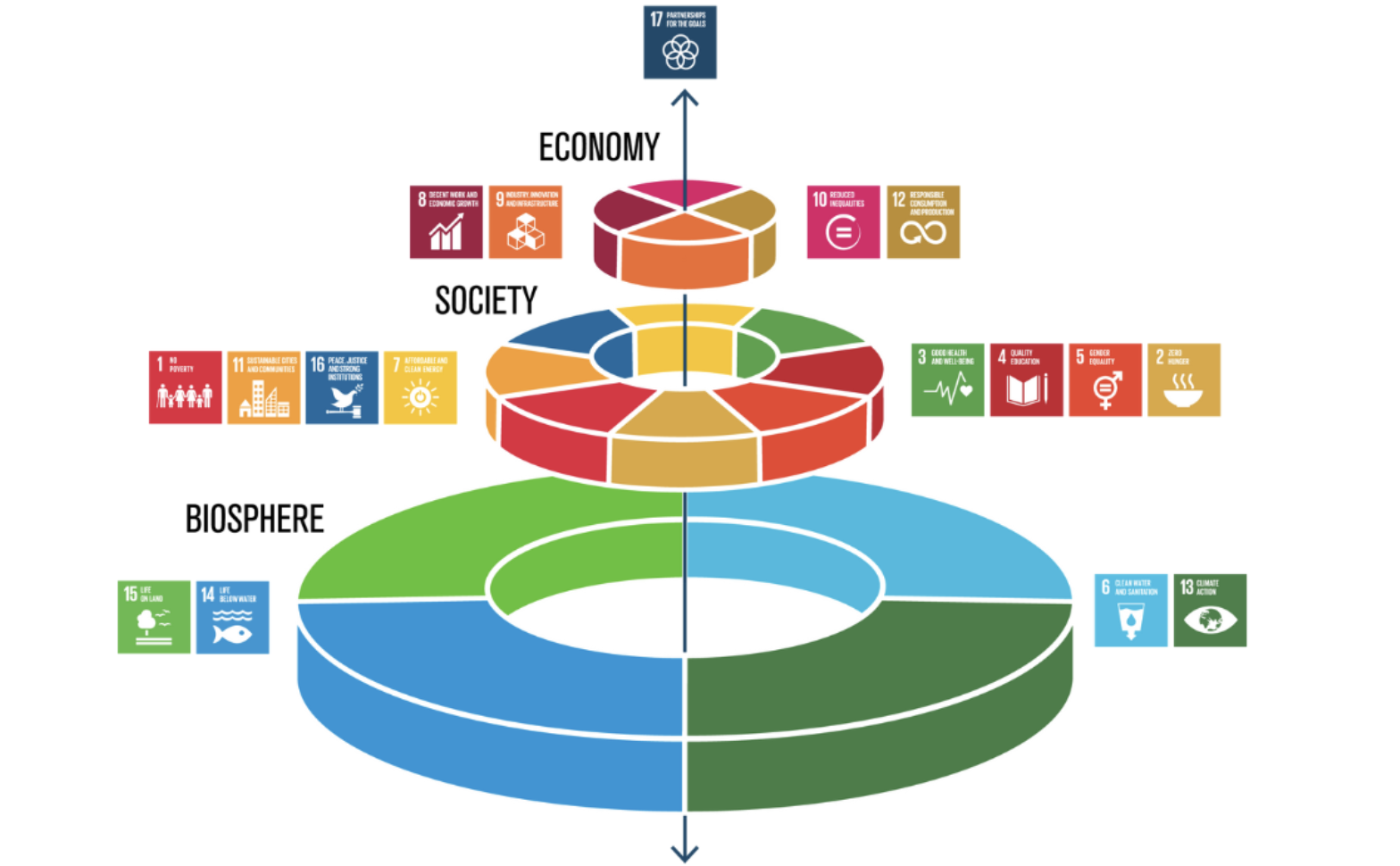
Nature underpins the entire economy. The Stockholm Resilience Centre uses the analogy of a wedding cake to present the UN's Sustainable Development Goals. The biosphere is the base layer; it underpins our society and economy. Society is in the middle, and the economy sits at the top.
A stable climate, and healthy, functioning ecosystems on land, in the ocean and in our fresh waterways are critical to a functioning society, and thus economy.
Ecosystem degradation undermines each of these factors. It leads to:
Direct biophysical impacts such as weaker agricultural output
Market impacts such as food-price inflation and supply chain bottlenecks
Fiscal and financial reverberations such as reduced exports and tax receipts, stranded assets and spending on disasters and restoration
Macroeconomic collapse where sovereign credit downgrades and there is slower economic growth
Think of it this way: every penny spent on flood repairs is a penny not spent on productivity. Every increase in food prices means less money for consumers to spend on other businesses, reducing overall economic output and tax revenue.
Nature Loss Creates a Borrowing Trap for Lower-Income Countries
Lower-income countries are the hardest hit by ecosystem degradation. They simply lack the financial means to service their debts.
The London School of Economics and Political Science analysed 53 economies between 2000 and 2020. It found that countries experiencing greater biodiversity degradation faced higher borrowing costs, even after conventional economic factors were considered. The researchers note that markets were unlikely to have tracked ecological data directly during this period. The cost reached bond markets indirectly, through the economic damage degradation causes.
More interestingly, the effect was up to three times higher among countries already facing the greatest borrowing costs. Many lower-income countries in Africa and Asia depend heavily on sectors such as agriculture and forestry for their economic output, so even a small impact on these ecosystems can have an outsized effect on the economy.
Governments need investment to protect and restore nature, yet degradation raises the cost of securing that investment.
Higher Government Borrowing Costs Affect the Whole Economy
When governments struggle to finance their debts or cannot borrow money, the effects ripple outwards.
Higher borrowing costs restrict government spending on public services such as infrastructure, healthcare, climate adaptation, and nature restoration. Governments are often the only bodies capable of performing these vital activities. Productivity and economic opportunities suffer when investment in transport, new technologies, or heavy industry is restricted.
Moreover, if a government is subject to high borrowing costs and their country experiences a climate disaster such as flooding, drought and extreme weather, governments are less likely to have taken the necessary action to mitigate the effects.
Government bond yields also influence interest rates and the cost of private-sector capital. Private investors could fund some of the projects governments can no longer afford. Higher sovereign risk makes funding those projects harder, since rising government bond yields push up the cost of private finance. Pension funds, banks, insurers, exporters, and businesses with international supply chains may all be exposed. Wealthier countries are not insulated simply because their domestic economies depend less directly on nature.
Financial Institutions Need People Who Can Price Nature Risk
Bond markets already reflect nature loss indirectly, through its effect on growth, trade and public finances. Pricing nature risk directly isn't as simple as pricing car accidents or life insurance policies. Climate disasters, ecosystem degradation, and loss of natural assets aren't always predictable. Yet countries at every income level need to understand how nature loss can weaken their economies. They also need to treat nature loss as a fiscal risk, factoring it into budgets and borrowing plans in the same way as debt and inflation.
Finance ministries, central banks, credit rating agencies, and investment firms need people who can connect ecological data with debt sustainability, creditworthiness, and portfolio risk.
The building blocks of that expertise already exist in some pockets of finance and across the environmental science sector. Credit analysts can assess how ecosystem degradation affects tax receipts and repayment capacity, while data specialists can track changes in forests, water, and biodiversity.
Professionals who identify degradation before it reaches bond markets give governments & insitutional investors a chance to fund restoration while capital remains affordable. That chance only matters if they act on the warning to manage long tail risk in their portfolios. Nature already shapes what countries pay to borrow. The opportunity sits with people who can put a price on that link early enough to change the outcome.
FAQs
Got A Question?
Everything you need to know about impact careers, sustainable job opportunities and our talent network in one easy place.
Our House Views content library and Awareness to Action series share insights on sectors, roles and career moves. Many candidates use these resources to narrow their focus before speaking with us.
Because the numbers are clear. Green and transition sectors are growing faster than the rest of the economy, attracting capital, talent and innovation. Positioning yourself there is a commercial decision, not just a values one.
Awareness to Action is our interview and insight series. We speak with leaders across the impact economy and turn real conversations into practical guidance for careers, teams and capital.
Yes, we regularly feature impact investors, founders and sustainability leaders in interviews and House Views content. If you have something valuable to share with the impact economy, we would love to hear from you.