Are oceans worth less than 1%?

The ocean currently absorbs approximately 31% of the CO2 that is released into the atmosphere, helping to limit the global warming that would otherwise occur.
Yet according to 10% for the Ocean, ocean causes receive less than 1% of global philanthropic funding. That is a striking mismatch between how much the ocean does for us and how much we invest in protecting it.
The ocean's surface is familiar, but most of what lies beneath it remains hidden from view. Damage to marine ecosystems lacks the stark, visible imagery of wildfires or melting ice caps. What cannot be seen is easier to overlook.
The ocean is an invaluable part of our climate infrastructure. It produces around 50% of the world's oxygen, and more than 3 billion people depend on it for protein and livelihoods. It is worth protecting not only because it is remarkable in its own right, but because so much of what keeps the planet habitable depends on it.
The Ocean Carbon Sink and Blue Carbon Ecosystems Explained
Carbon dioxide readily dissolves in water. Much of the CO2 that enters the atmosphere is absorbed directly into the ocean itself, a process known as the ocean carbon sink.
A second, distinct mechanism happens closer to shore. Coastal ecosystems such as mangrove forests, saltmarshes, and seagrasses absorb carbon from the atmosphere through growth, and store it in the carbon-rich sediment beneath them, known as biological carbon fixation.
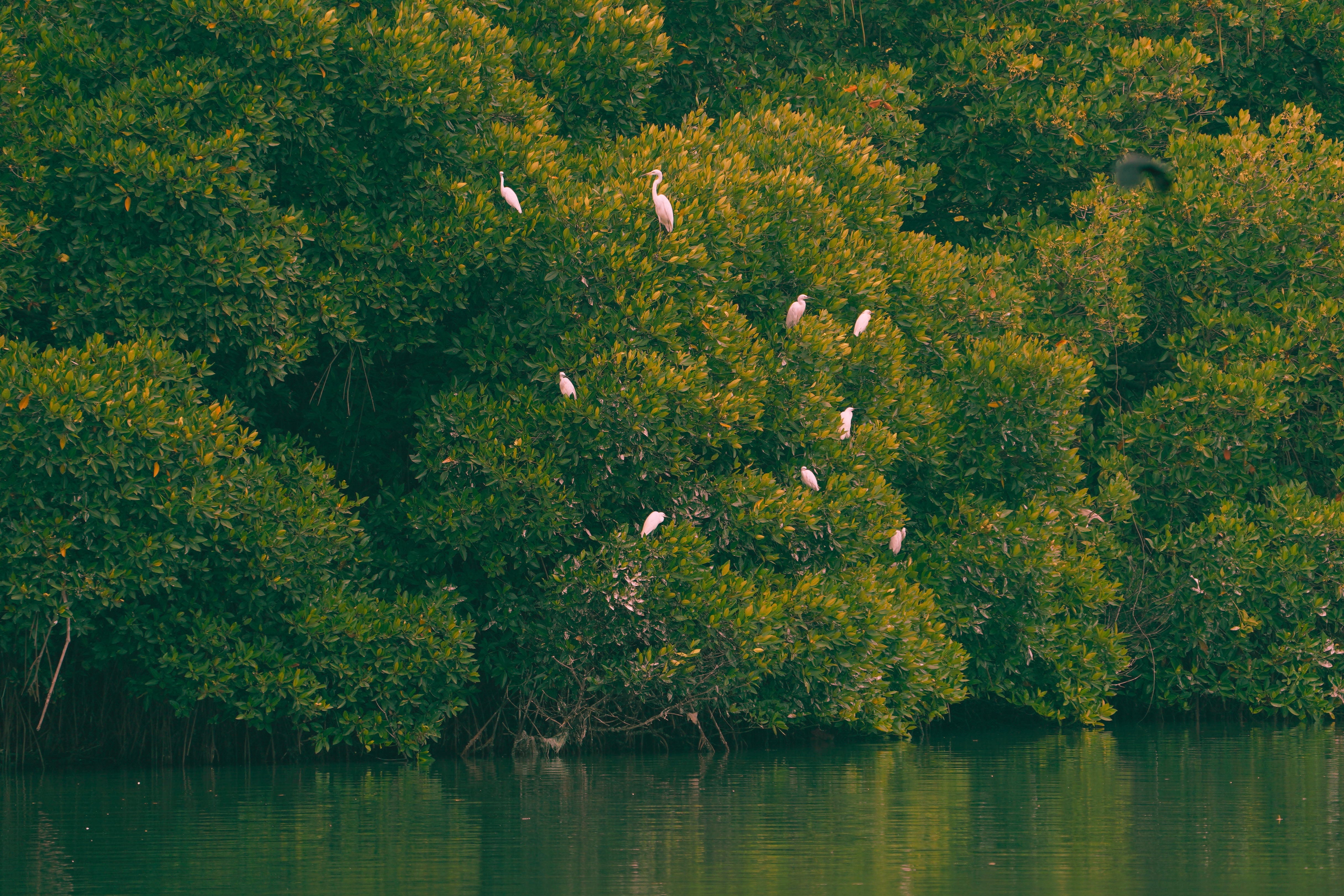
Known as blue carbon, these coastal ecosystems can store vastly more carbon than almost any terrestrial landscape. Mangrove forests alone sequester up to 10 times more carbon per hectare than terrestrial forests, and are responsible for 10% of global carbon burial.
Unfortunately, these ecosystems are under attack. Salt marshes have declined by 25% since the 1800s, while mangroves and seagrass meadows have fared little better, losing at least 35% and 29% of their global coverage respectively. Every hectare of blue carbon habitat destroyed doesn't just remove a future carbon sink, it risks releasing the carbon already stored within it.
Seagrass Restoration Shows What Blue Carbon Funding Can Achieve
Seagrass meadows demonstrate a genuine contradiction: one of the most powerful carbon sinks in the ocean is also one of the least protected. Seagrasses capture carbon up to 35 times faster than tropical rainforests. UK restoration projects show what targeted funding can achieve in practice. Since 2019, partners have planted 4.9 million seagrass seeds across Wales, the Solent, and the Firth of Forth.
Seven years on, the results are genuinely encouraging, though not uniform. Monitoring across the project sites has confirmed that seagrass is now expanding beyond the original restoration areas. Progress hasn't been perfectly smooth, some early trial plots in Wales showed very low seed survival, while others recorded substantial regrowth within a year, but the overall trajectory points toward these ecosystems taking hold rather than failing to establish.
Funding ocean restoration supports more than planting. Mapping identifies which sites are viable before resources are committed. Monitoring tracks whether the seagrass is actually surviving and spreading. Scientific research improves the techniques used at every stage, and local partnerships bring in the knowledge and labour needed to make restoration happen on the ground, creating real local employment and involving coastal communities directly in the process. Methods that work can then be replicated in other coastal regions, turning a single successful project into a repeatable model.
Protecting Marine Carbon Sinks Matters as Much as Restoring Them
The blue carbon ecosystems just described don't just need restoring, they need protecting from the ongoing damage. Fishing practices continue to disturb carbon-rich seabed sediment, and bottom trawling is the clearest example of how serious this threat is.
Research conducted in New Zealand's Hauraki Gulf in 2026 found that trawling can resuspend sediment and release significant amounts of carbon dioxide into the water column. Worse, an estimated 55% to 60% of that trawling-induced carbon dioxide could reach the atmosphere within seven to nine years.
Currently, European governments spend an estimated €1.17 billion annually subsidising bottom trawling. Sit with that figure for a moment: public money is actively funding the disturbance of carbon stores that other public and philanthropic money is trying to protect. That is not a small oversight. It suggests ocean carbon still has almost no presence in how governments actually decide where to spend.
The Ocean Conservation Funding Gap Is an Opportunity to Build Better Solutions
Less than 1% of global philanthropic funding is spent on the oceans. That is a tiny share of a much larger shortfall: researchers estimate that protecting 30% of the ocean, a widely adopted international target, would require $9 to $12 billion a year, several times current spending. Philanthropy alone was never going to close a gap that size. What it can do is fund the things public and commercial money typically won't: early-stage research, restoration trials, community projects, pilot technologies, policy advocacy, and the measurement systems needed to prove what works, laying the groundwork for the larger public and private investment the gap actually requires.
As the UK's seagrass restoration projects show, even relatively small investments can have an outsized impact. Greater investment could support solution providers across several distinct areas: marine monitoring and data businesses, blue carbon restoration and project development, lower-impact fishing technologies, and financial and insurance services built around marine recovery.
None of this happens without organisations willing to take on genuinely difficult, unproven markets, and professionals capable of turning ecosystem protection into something commercially viable rather than dependent on grants alone.
Ocean Climate Careers Need More Than Marine Scientists
Protecting the ocean is not a job for marine biologists alone. Businesses in this sector need project managers, software developers, sales teams, investors, finance professionals, operators, and leaders who can turn promising science into viable services.
Few sectors offer this much room to make a difference. Ocean funding has lagged so far behind other parts of the climate response that there is genuine space for new ideas, new businesses, and new careers to take shape here rather than compete in an already crowded field. For anyone looking to do work that matters, the ocean economy offers the chance to apply familiar skills to an area that remains critically underfunded. The work will not always be easy. Data is incomplete, regulation is complex, and many solutions are still finding their commercial footing.
That difficulty is exactly the opportunity. An area absorbing 31% of the world's CO2 while receiving less than 1% of philanthropic funding needs people capable of closing that gap.
FAQs
Got A Question?
Everything you need to know about impact careers, sustainable job opportunities and our talent network in one easy place.
Our House Views content library and Awareness to Action series share insights on sectors, roles and career moves. Many candidates use these resources to narrow their focus before speaking with us.
Because the numbers are clear. Green and transition sectors are growing faster than the rest of the economy, attracting capital, talent and innovation. Positioning yourself there is a commercial decision, not just a values one.
Awareness to Action is our interview and insight series. We speak with leaders across the impact economy and turn real conversations into practical guidance for careers, teams and capital.
Yes, we regularly feature impact investors, founders and sustainability leaders in interviews and House Views content. If you have something valuable to share with the impact economy, we would love to hear from you.