When Rewilding Works: From Conservation to Farming

Summer 2026 has been confirmed by the Met Office as the UK's hottest on record, with five separate heatwaves between May and August and a mean temperature that broke the previous record set only last year. In the middle of that, aerial footage from the National Trust's Holnicote Estate in Somerset showed something specific: parts of the estate stayed green and lush through all five heatwaves, while the land around them turned brown and parched in the same weeks, under the same sun, in the same county. Holnicote demonstrated that restoring natural water systems genuinely builds drought resilience. The harder question is what it would take to get the same result on land that still has to grow food.
What Gave Holnicote Its Drought Resilience
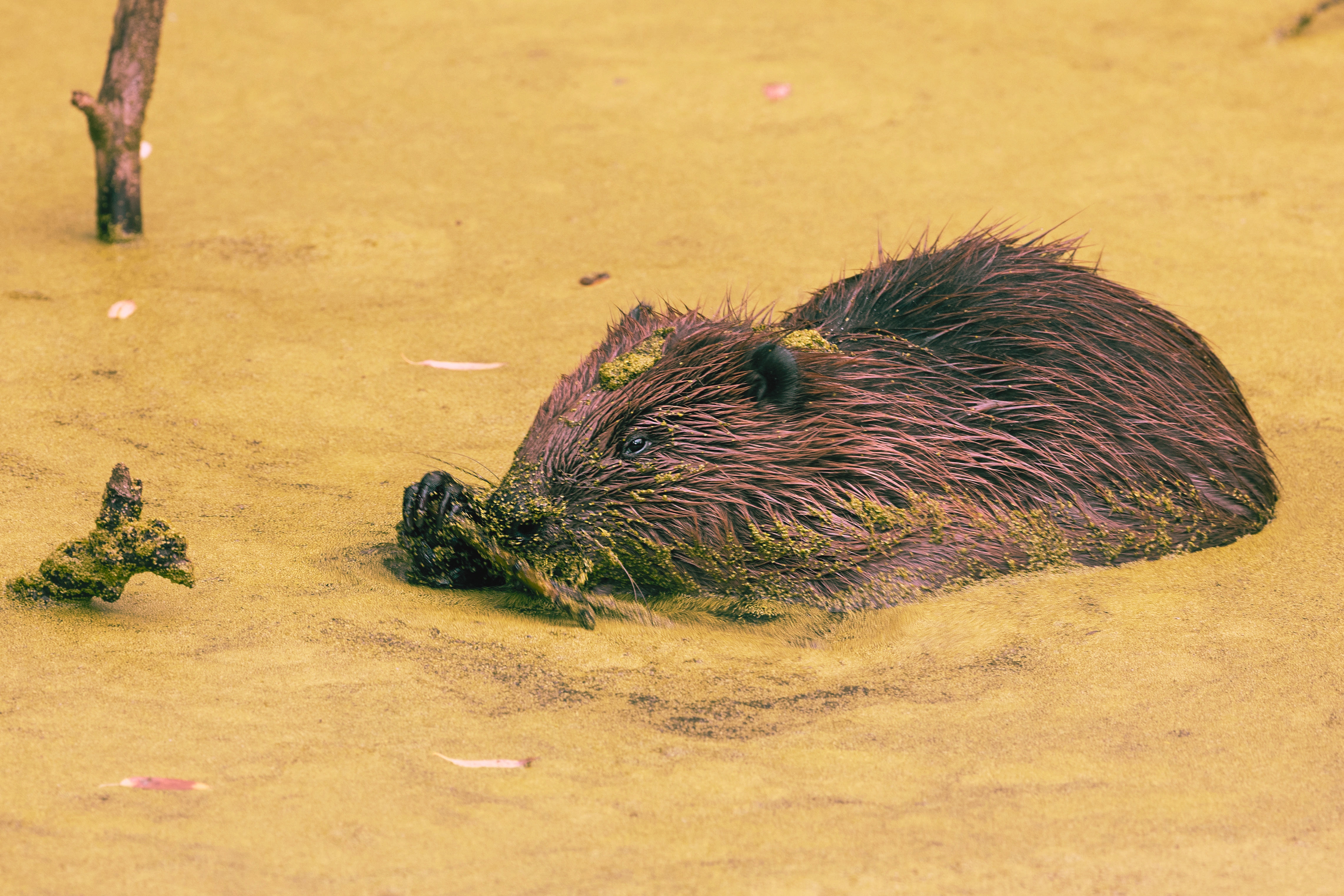
For generations, UK land management has followed the same basic logic: drain water off the land as fast as possible. Rivers were straightened and deepened. Wetlands were dug out and dried. At Holnicote, the National Trust reversed that. Rivers were allowed to meander back into their natural courses. Wetlands were rewetted. Beavers were reintroduced in 2020, and their dams have slowed water further still.
The effect works two ways at once. Restored, undrained land holds onto the water it already has for longer, rather than losing it immediately. It also absorbs rainfall more readily in the first place, since dry, compacted, or heavily drained soil loses some of its capacity to take water in, causing rain to run off the surface instead of soaking through. Ben Eardley, the project manager at Holnicote, said the results were “remarkable.” The findings also cut against a specific claim made by some commentators this year, that rewilding increases wildfire risk. Holnicote's own data shows the opposite.
Farmland Needs the Same Approach, Without Losing Its Purpose
Holnicote's resilience did not come free. This is conservation land, and its water-holding power exists because it has been taken out of food production entirely. The genuine challenge is applying that same underlying principle, working with water instead of draining it away, to land that is still actively farmed.
Natural Flood Management Already Exists on Farms. It Needs to Scale.
This is not entirely uncharted territory. Rivers Trusts and Environment Agency-backed schemes already run Natural Flood Management projects on working farmland across the UK, using leaky dams, buffer strips, and reshaped ditches to slow water down without taking fields out of production. Agroforestry, whether trees planted among crops or integrated with grazing livestock through silvopasture, and herbal ley-crop rotations, which work leys into the rotation alongside conventional crops, are both established techniques with UK trial evidence behind them. A hedge used as a natural leaky dam in one Cumbrian trial reduced peak flood depth downstream by over 40%.
What's missing is scale, and the design expertise to fit these systems around a specific farm's crop rotation, machinery access, and margins. That gap between proven technique and widespread, farm-ready adoption is where the real work still needs to happen.
This Is Where the Impact Careers Are
Closing that gap needs hydrologists who can map how water moves across a specific farm, agronomists who understand what a rotation can actually tolerate, and land managers who have run catchment schemes and can translate that experience onto commercial holdings. It also needs farm businesses willing to be early adopters, and the Rivers Trusts and catchment partnerships already doing this work need people capable of taking it from a handful of pilot farms to standard practice across a region.
This is not a straightforward choice between farming and conservation. UK trials of related regenerative techniques have shown real profitability gains, in some cases well above conventional farming, but usually only after several years and an initial dip in margins while soil health rebuilds. The businesses and professionals who can manage that transition properly, not just the underlying technique, are where the real opportunity sits.
Holnicote Answered One Question. The Other Is Still Open.
Holnicote answered one question this summer: whether nature restoration builds real resilience. It does. The harder, more valuable question is still open: how do you get a working farm to hold water the way Holnicote estate does. That is where the genuine demand for skilled, capable people now sits.
FAQs
Got A Question?
Everything you need to know about impact careers, sustainable job opportunities and our talent network in one easy place.
Our House Views content library and Awareness to Action series share insights on sectors, roles and career moves. Many candidates use these resources to narrow their focus before speaking with us.
Because the numbers are clear. Green and transition sectors are growing faster than the rest of the economy, attracting capital, talent and innovation. Positioning yourself there is a commercial decision, not just a values one.
Awareness to Action is our interview and insight series. We speak with leaders across the impact economy and turn real conversations into practical guidance for careers, teams and capital.
Yes, we regularly feature impact investors, founders and sustainability leaders in interviews and House Views content. If you have something valuable to share with the impact economy, we would love to hear from you.